Trusted by 150+ Homeowners
AC Fire Restoration in Webster, TX
- Over 152 5-Star Reviews
- Free Estimates and Quotes
- 100% Satisfaction Guaranteed
- Child, Family & Pet Safe Steps
- 24-Hour Emergency Service
- Fully Licensed & Insured

Expert AC Fire Restoration in Webster, TX
Did you know that smoke particles can travel through your HVAC system and settle in your home’s ductwork up to three days after a fire has been extinguished? This means even if the fire didn’t directly damage your air conditioning unit, you could still have a serious smoke and soot problem lingering. Dealing with AC fire damage requires a specialized approach. You’re probably wondering how to even begin cleaning up this specific type of mess and what it will cost you. We understand these concerns are weighing on your mind right now.
Locally, homeowners trust our team for AC fire restoration because we get it right the first time. We’ve helped over 165 clients in your neighborhood achieve a clean, safe home after fire incidents. You’ll find our approach is direct and effective. Our crews are trained specifically for the unique challenges that smoke and soot contamination pose to HVAC systems. We’re dedicated to restoring your air quality and your confidence.
- We use specialized equipment to detect and remove microscopic smoke particles from your AC system, preventing them from recirculating throughout your home.
- Our process includes thorough cleaning and deodorizing of ductwork, ensuring no lingering odors or health risks remain after the fire damage.
- We meticulously document all AC fire damage, which is crucial for your insurance claim, helping you get the coverage you deserve.
How Our AC Fire Restoration Process Works
A proper AC fire restoration process is more than just a quick clean. It involves understanding how smoke and fire byproducts interact with your system’s components. Cutting corners here can lead to recurring odors and potential health issues down the line. Our team follows a detailed protocol to ensure your system is truly restored, not just superficially cleaned. This attention to detail is what sets us apart when dealing with sensitive AC fire damage.
Inspection and Assessment
Our technicians begin with a thorough inspection of your entire HVAC system, including the air handler, ductwork, and vents. We use advanced tools to identify all areas affected by smoke, soot, and fire residue. This initial assessment helps us determine the scope of work and create a targeted restoration plan. You’ll receive a clear explanation of what we find and our proposed next steps.
Containment of Contaminants
Before any cleaning begins, we set up containment zones to prevent the spread of soot and smoke particles to unaffected areas of your home. This step is vital for protecting your belongings and maintaining indoor air quality during the restoration. We use specialized barriers and negative air pressure systems to isolate the work area. This careful approach minimizes cross-contamination risks.
Ductwork Cleaning
This is where the real work happens for AC fire restoration. We use powerful, industrial-grade vacuums and rotary brush systems to dislodge and remove soot from inside your ductwork. Our technicians ensure every inch of the internal surfaces is cleaned. We pay close attention to any bends or difficult-to-reach areas where debris can accumulate. This deep cleaning is essential for removing the source of lingering odors.
System Deodorization
Even after cleaning, residual odors can persist. We employ advanced thermal fogging and ozone treatments to neutralize smoke odors within the ductwork and AC unit. These methods break down odor-causing molecules, rather than just masking them. The goal is to eliminate the smell entirely, restoring a neutral scent to your home’s air. We’ll ensure your air feels and smells fresh again.
Reinstallation and Testing
Once all components are cleaned and deodorized, our team carefully reassembles the system. We then perform comprehensive testing to ensure everything is functioning correctly and efficiently. This includes checking airflow, temperature regulation, and overall system performance. We want you to feel confident that your AC system is safe and working as it should be after the restoration.
Don’t let smoke damage compromise your home’s air quality. Contact us today for immediate assistance with your AC fire restoration needs. We’re ready to help you breathe easier.
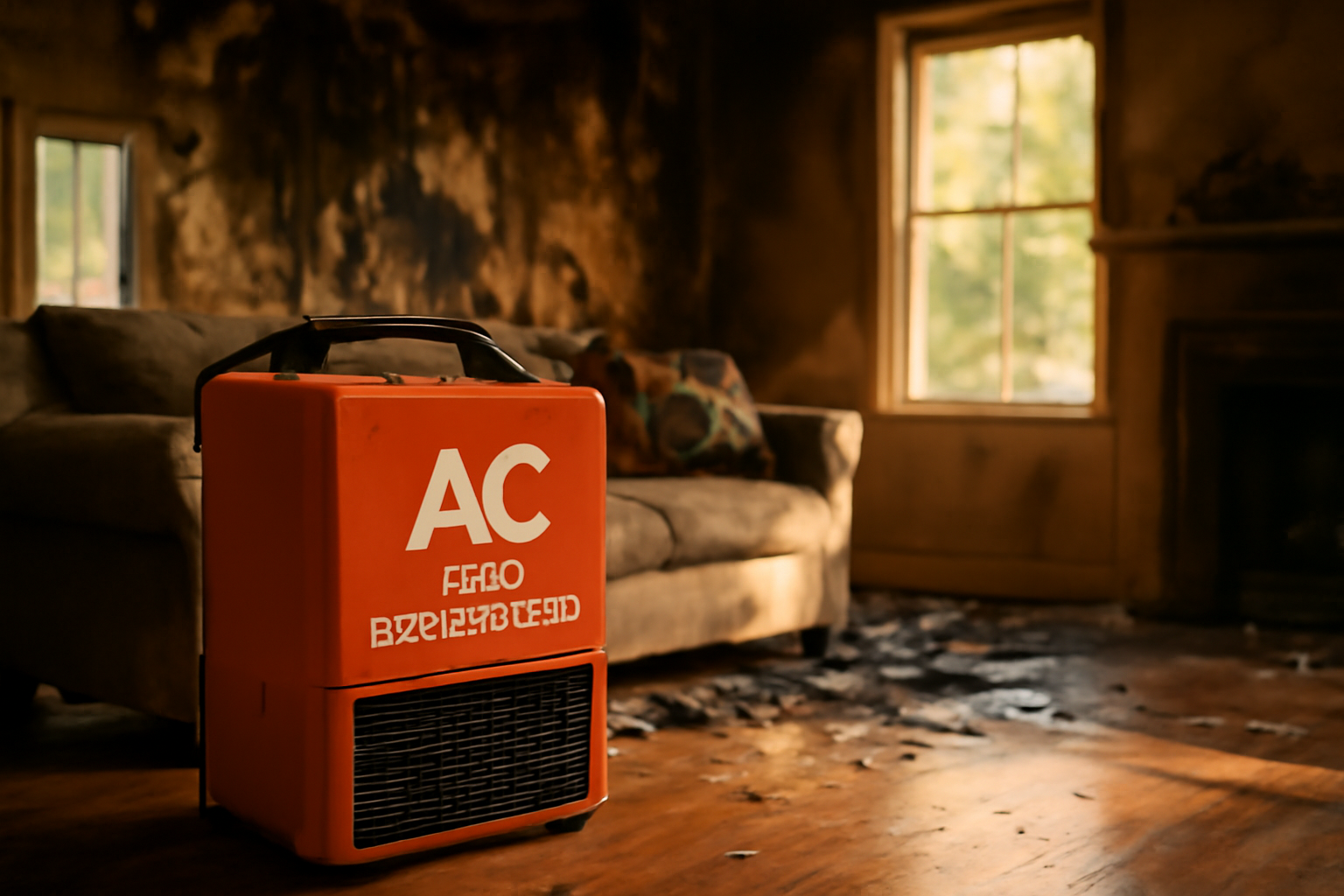
Warning Signs You Need AC Fire Restoration
Ignoring early indicators of AC fire damage can lead to more extensive issues and higher repair costs. It’s important to recognize these signs so you can address them promptly. Early detection is key to preventing further problems and ensuring your family’s health and safety. Recognizing these signs can save you significant trouble down the road.
Persistent Smoke Odors
If you notice a lingering smell of smoke, even days after a fire has been put out, it’s likely in your ductwork. These odors can be subtle at first but become more noticeable when your AC system is running. Don’t assume the smell will just disappear on its own; it indicates ongoing contamination.
Visible Soot in Vents
Take a look at your air vents. If you see a fine layer of black or gray soot around the openings or on the vent covers, it means smoke particles have entered and traveled through your HVAC system. This is a clear sign that professional cleaning is required.
Changes in Air Quality
Have you noticed an increase in dust, coughing, or allergy-like symptoms since a fire? Your AC system could be circulating smoke residue and irritants. Poor air quality is a serious health concern that needs immediate attention from trained professionals.
Unusual Noises from AC
Soot and debris can sometimes affect the performance of your AC unit’s fan or other moving parts. If you hear new rattling, grinding, or whistling sounds coming from your system, it could be due to internal contamination. These noises suggest something is obstructing normal operation.
Residue on Surfaces
A fine, greasy film on furniture, walls, or electronics near air vents can be a sign that your AC is blowing soot particles throughout your home. This residue indicates that the contamination is widespread and originating from your HVAC system.
System Malfunction After Fire
If your AC system isn’t cooling or heating effectively after a fire, or if it’s cycling on and off erratically, it could be damaged or blocked by smoke and soot. This malfunction is a direct consequence of the fire’s impact on the system’s components.
AC Fire Restoration vs. DIY: When To Call a Professional
| Situation | DIY? | Call a Pro? | Why |
|---|---|---|---|
| Wiping down visible dust from vent covers | Yes | No | Minor surface dust is usually manageable with a damp cloth. |
| Cleaning accessible, light soot from a single vent grill | Maybe | Yes | Soot can be fine and spread easily; professionals have containment tools. |
| Using an air freshener to mask smoke smell | No | Yes | Masking odors doesn’t remove the source, which can be harmful. |
| Deep cleaning the entire HVAC ductwork system | No | Yes | Requires specialized equipment and knowledge to clean thoroughly without damage. |
| Deodorizing the entire home after a fire | No | Yes | Requires professional-grade treatments and safety protocols. |
| Assessing the extent of damage to the AC unit itself | No | Yes | Requires technical expertise to evaluate potential internal damage and safety risks. |
For anything beyond a light surface wipe-down, professional AC fire restoration is the safer and more effective choice. Our team has the specialized tools and expertise to handle the complex nature of smoke and soot contamination in your HVAC system. You want to ensure the air you breathe is clean and healthy, and that requires professional intervention.
AC Fire Restoration Cost In Webster, TX
The cost for AC fire restoration in Webster, TX can vary significantly. Factors like the size of your home, the extent of smoke and soot contamination, and the specific components of your HVAC system affected all play a role. These price ranges are estimates and can change based on the complexity of the job. We provide free estimates after an on-site assessment.
| Service | Typical Price Range | What Affects Cost |
|---|---|---|
| HVAC System Inspection & Assessment | $250 – $750 | Size of the system and complexity of inspection required. |
| Ductwork Cleaning (per linear foot) | $1 – $3 per linear foot | Total length of ductwork and severity of soot buildup. |
| Air Handler Unit Cleaning | $400 – $1,200 | Size of the unit and how much disassembly is needed. |
| Soot and Residue Removal (per room) | $300 – $800 | Amount of soot present and the type of surfaces affected. |
| Ozone Deodorization Treatment | $500 – $1,500 | Size of the affected area and duration of treatment needed. |
| Complete HVAC System Deodorization | $1,000 – $3,000+ | Overall system size, complexity, and the intensity of smoke odors. |
These figures provide a general idea of what to expect for AC fire restoration. A detailed, on-site inspection is necessary for an accurate quote. We offer free estimates to help you understand the investment required to restore your system and air quality.
Service Areas Near Webster, TX
League City, Clear Lake City, Friendswood, Pearland, Houston, Pasadena, La Porte, Deer Park, Kemah, Seabrook, Taylor Lake Village, Shoreacres, San Leon, Bacliff, Algoa, Santa Fe, Texas City, Dickinson, Alvin, Manvel
Common Questions About AC Fire Restoration
How long does AC fire restoration typically take?
The timeline for AC fire restoration varies depending on the severity of the damage. A basic duct cleaning might take a few hours to a full day. However, if the fire was significant and soot has penetrated deeper into the system or affected the air handler, it could take several days. We’ll provide a more precise estimate after our initial assessment.
Will my insurance cover AC fire restoration costs?
In most cases, yes. Homeowner’s insurance policies typically cover fire damage, and this often includes damage to your HVAC system caused by smoke and soot. Our team works closely with insurance adjusters and provides detailed documentation to help your claim go smoothly. We aim to make the insurance process as straightforward as possible for you.
Is smoke damage from AC a health hazard?
Absolutely. Smoke particles are often microscopic and contain toxic chemicals. When your AC system circulates these particles, they can trigger respiratory problems, allergies, and other health issues. It’s crucial to address smoke damage promptly to ensure your home’s air is safe to breathe. We prioritize your family’s well-being.
What equipment do you use for AC fire restoration?
We use specialized equipment designed for fire and smoke remediation. This includes high-powered HEPA vacuums for soot removal, rotary brush systems for duct cleaning, thermal foggers and ozone generators for deodorization, and air scrubbers to purify the air. Our tools are essential for effectively removing contaminants and restoring your system. We use industry-standard equipment for the best results.
Can I prevent AC fire damage from happening again?
While you can’t always prevent fires, you can take steps to minimize HVAC system vulnerability. Regular maintenance is key, including professional duct cleaning every few years and ensuring your AC unit is inspected annually. Having working smoke detectors and a fire escape plan for your home in Webster, TX are also critical safety measures. We recommend keeping up with maintenance to protect your investment.
Check Our Other Relevant Services

Gary Gwin: Damage Restoration Expert
With over 20 years of hands-on experience, Gary Gwin is a trusted authority in property recovery and disaster mitigation. As a licensed specialist, Gary has dedicated his career to restoring safety and peace of mind for homeowners facing environmental crises.
𝗖𝗲𝗿𝘁𝗶𝗳𝗶𝗰𝗮𝘁𝗶𝗼𝗻𝘀: Gary holds multiple advanced IICRC certifications, including Water Damage Restoration (WRT), Applied Microbial Remediation (Mold), Applied Structural Drying (ASD), Odor Control, and Fire and Smoke Restoration. His deep technical knowledge ensures every project meets the highest industry standards for health and safety.
𝗕𝗲𝘀𝘁 𝗣𝗮𝗿𝘁 𝗼𝗳 𝘁𝗵𝗲 𝗝𝗼𝗯: Gary finds the most fulfillment in guiding families through the recovery process, transforming a chaotic property loss into a restored, habitable home.
𝗙𝗮𝘃𝗼𝗿𝗶𝘁𝗲 𝗣𝗮𝘀𝘁𝗶𝗺𝗲: When off the clock, Gary enjoys exploring local hiking trails and woodworking.