Trusted by 150+ Homeowners
Hardwood or Wood Floor Water Damage Restoration in Highlands, TX
- Over 152 5-Star Reviews
- Free Estimates and Quotes
- 100% Satisfaction Guaranteed
- Child, Family & Pet Safe Steps
- 24-Hour Emergency Service
- Fully Licensed & Insured
Protect Your Investment: Expert Hardwood or Wood Floor Water Damage Restoration in Highlands, TX
Imagine walking into your living room, and there it is. Your beautiful hardwood floors are starting to buckle, a strange, soft spot underfoot. You can hear a faint dripping, or maybe you just catch a whiff of that unmistakable damp, musty smell. It’s a sinking feeling, knowing your gorgeous wood floors are under attack from water. This isn’t just an inconvenience; it’s a situation that needs immediate attention to prevent further damage and save your floors. We understand how stressful this discovery can be for homeowners in Highlands, TX, and our team is ready to help.
With over 165 five-star reviews from satisfied neighbors, it’s clear that locals trust us when their wood floors face water issues. We’re known for our diligent restoration work and for treating your home with the respect it deserves. When water threatens your beautiful hardwood, you want a team that knows exactly what to do, and that’s what we deliver. We focus on getting your floors back to their best condition, quickly and effectively.
- We specialize in the delicate drying of hardwood, using precise techniques to avoid warping and cupping, preserving the natural beauty of your wood.
- Our targeted approach addresses hidden moisture deep within the subfloor, preventing long-term issues like mold and structural rot that can affect your entire home.
- We aim for a fast, efficient restoration, minimizing disruption to your daily life so you can get back to enjoying your home without worry.
The Science Behind Restoring Your Water-Damaged Hardwood Floors
When your hardwood floors get wet, it’s not just about mopping up the surface. Water penetrates deep into the wood and subfloor, creating a complex drying challenge. Our process for hardwood or wood floor water damage restoration is a carefully controlled scientific operation. We use specialized equipment and protocols to extract moisture, monitor humidity levels, and ensure your floors dry evenly and thoroughly. Cutting corners here can lead to irreversible damage, warping, and mold growth, costing you much more in the long run. That’s why we focus on a meticulous, science-backed approach.
Step 1: Immediate Water Extraction
The first crucial step is to remove standing water as quickly as possible. We use powerful extraction units designed to pull water from the surface and even from within the wood fibers. This immediately stops the damage from worsening. This phase is critical for minimizing saturation and usually takes a few hours, depending on the volume of water.
Step 2: Moisture Assessment and Mapping
Once the bulk of the water is gone, we conduct a thorough assessment. Using advanced moisture meters, we measure the water content in your hardwood, subfloor, and surrounding materials. This helps us create a precise map of the affected areas. Understanding the full scope ensures we don’t miss any hidden moisture pockets, which is vital for preventing future problems.
Step 3: Targeted Drying Systems
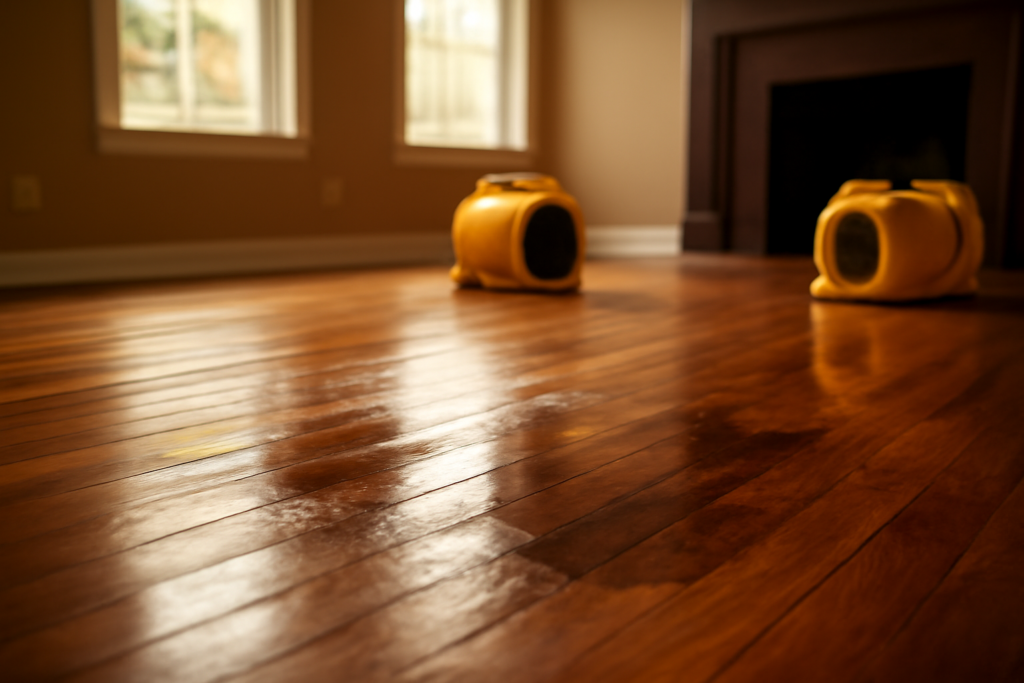
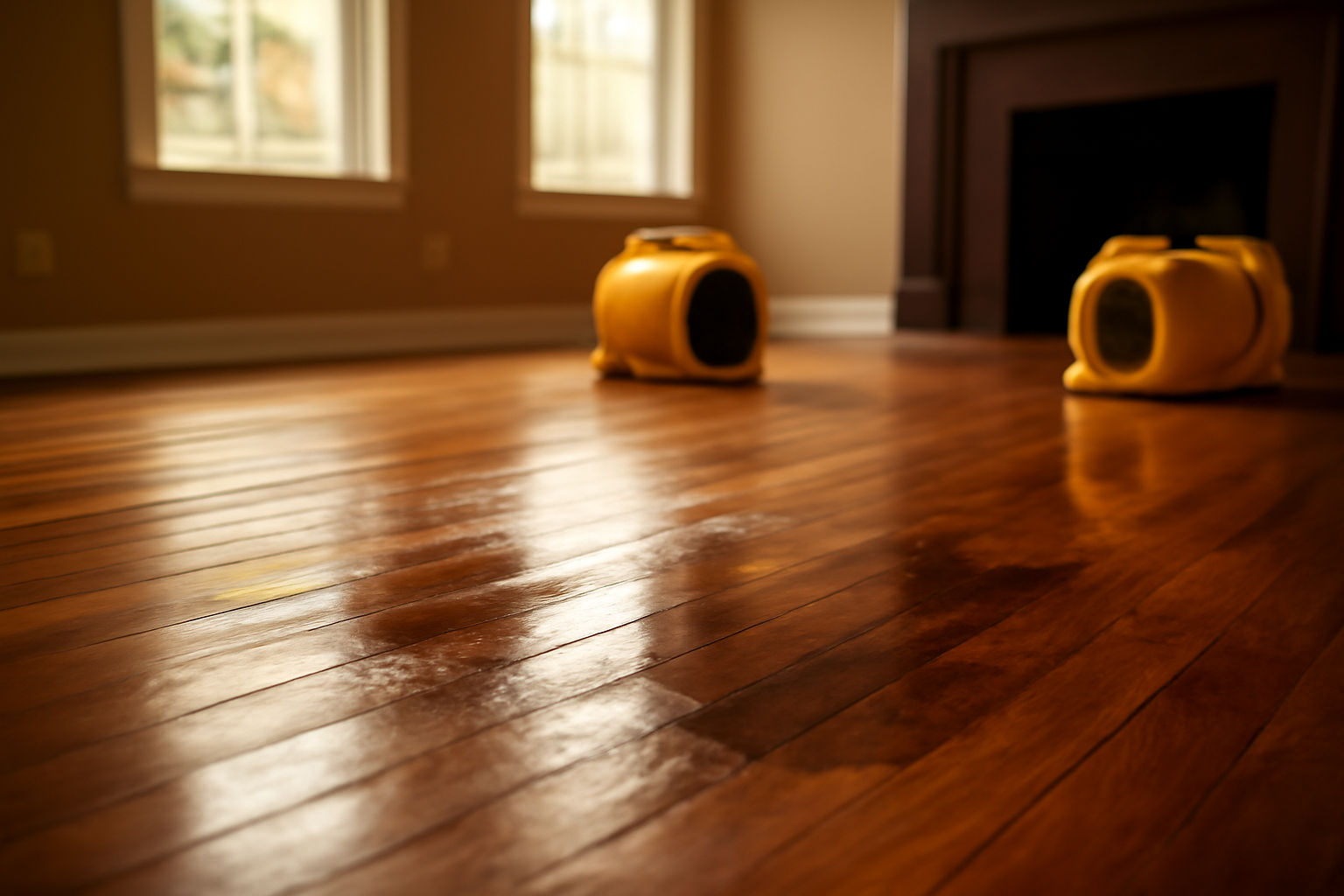
This is where our technical expertise truly shines. We deploy a network of specialized drying equipment, including industrial-grade dehumidifiers and air movers. These machines work together to create optimal drying conditions, drawing moisture out of the wood and lowering humidity levels in your home. This controlled environment speeds up drying and helps prevent warping and cupping.
Step 4: Containment and Air Quality
While drying, we often use containment barriers to isolate the affected area. This prevents moist air from spreading and protects unaffected parts of your home. We also utilize air scrubbers with HEPA filters to remove any airborne contaminants, ensuring your indoor air quality remains healthy. This focus on containment is key to a cleaner, safer restoration.
Step 5: Monitoring and Verification
Throughout the drying process, which can take several days, we continuously monitor moisture levels. We use our meters to track progress and adjust our equipment as needed. Our goal is to bring your floors back to their normal moisture content, verified by precise readings. This thorough verification ensures the job is done right, providing long-lasting results.
Don’t let water damage ruin your beautiful floors. Call us now for expert hardwood or wood floor water damage restoration. We’re ready to spring into action for your property.
The Subtle Signs Your Hardwood Floors Need Urgent Care
Catching water damage early is key to saving your hardwood floors and preventing more costly repairs down the line. Sometimes the signs are obvious, but often they’re subtle. Recognizing these indicators can make a huge difference in the restoration outcome. Pay close attention to your floors, and if you notice any of these, it’s time to get professional help fast.
Warping or Buckling Boards
If you see sections of your hardwood floor lifting, curving, or pushing upwards, that’s a clear sign of moisture absorption. The wood is expanding, causing it to lose its flat surface. This is a serious indicator of damage and needs immediate assessment.
Cupping or Crowning
Cupping is when the edges of a floorboard are higher than the center, like a shallow bowl. Crowning is the opposite, where the center is higher. Both are caused by uneven moisture distribution within the wood. This distortion means your floors have absorbed significant water and require expert intervention.
Surface Discoloration or Stains
Water can leave behind mineral deposits or cause tannins in the wood to bleed, resulting in dark spots, rings, or general discoloration. These stains not only look bad but also indicate that water has penetrated the finish and into the wood itself. Addressing this promptly can save your floor’s appearance.
Soft or Spongy Spots
Walk across your floors, especially after a suspected leak. If you feel any areas that give way easily or feel soft and spongy, it means the subfloor or the wood itself has become saturated and compromised. This is a critical warning sign that needs immediate inspection.
Gaps Between Floorboards
As wood dries and shrinks, gaps can appear between the planks. If you notice new, widening gaps, it could be a sign that your floors have recently been exposed to excess moisture and are now drying out unevenly. These gaps can allow more moisture to enter later, leading to further complications.
Musty Odors That Won’t Go Away
A persistent damp, musty smell, especially near the floor, is a strong indicator of hidden moisture. This odor is often caused by mold or mildew growth, which thrives in damp environments. Ignoring this smell can lead to unhealthy air quality and extensive mold problems.
Hardwood or Wood Floor Water Damage Restoration vs. DIY: When To Call a Professional
| Situation | DIY? | Call a Pro? | Why |
|---|---|---|---|
| Minor surface spill on sealed hardwood (dried within minutes) | Yes | No | Quickly wiped up, it usually causes no lasting harm. |
| Small puddle from a potted plant leak (dried within an hour) | Maybe | Yes | Even short exposure can penetrate some finishes and start affecting wood. |
| Water from a burst pipe or overflowing tub (hours of saturation) | No | Yes | Deep saturation requires professional extraction and drying to prevent permanent damage. |
| Water damage causing visible buckling or warping | No | Yes | Structural changes to the wood require specialized equipment and expertise to correct. |
| Suspected mold growth or musty odors | No | Yes | Mold remediation requires safety protocols and specialized equipment to remove safely. |
| Large areas affected by flooding or significant leaks | No | Yes | Extensive damage needs immediate, large-scale intervention to save the flooring. |
For anything beyond a minor, quickly addressed surface spill, calling a professional for hardwood or wood floor water damage restoration is usually the safest bet. We have the tools and knowledge to handle the complexities involved. Getting it right the first time saves you significant future headaches.
Hardwood or Wood Floor Water Damage Restoration Cost In Highlands, TX
The cost for hardwood or wood floor water damage restoration in Highlands, TX, varies significantly. Factors like the extent of the water damage, the square footage affected, the type of wood, and the necessary drying time all play a role. These figures are estimates to help you understand the potential investment required.
| Service | Typical Price Range | What Affects Cost |
|---|---|---|
| Water Extraction & Surface Drying | $400 – $1,500 | Volume of water, accessibility of the area. |
| Subfloor Drying & Dehumidification | $800 – $3,000 | Duration of drying, number of machines needed, size of the space. |
| Moisture Assessment & Monitoring | $200 – $600 | Complexity of the affected area, frequency of checks. |
| Containment & Air Quality Control | $300 – $1,000 | Size of containment, need for air scrubbers. |
| Minor Board Repair or Replacement | $500 – $2,000+ | Number of boards needing replacement, cost of matching wood. |
| Full Floor Restoration (if salvageable) | $1,500 – $5,000+ | Overall damage severity, need for sanding/refinishing. |
A precise estimate can only be determined after an on-site inspection of your property. We offer free, no-obligation estimates to give you a clear understanding of the costs involved.
Service Areas Near Highlands, TX
Cloverleaf, Sheldon, McNair, Barrett, Huffman, Crosby, Baytown, Mont Belvieu, Dayton, Highlands, Kemah, La Porte, Pasadena, Galena Park, Jacinto City, Channelview, Pearland, League City, Friendswood, Webster.
Common Questions About Hardwood or Wood Floor Water Damage Restoration
How long does it take to dry hardwood floors after water damage?
The drying time for hardwood floors can vary greatly, typically ranging from 3 to 10 days. This depends on how saturated the wood is, the type of wood, ambient humidity, and the drying equipment used. We use advanced moisture meters to track progress and ensure your floors are dried thoroughly and safely.
Is hardwood floor water damage covered by homeowners insurance?
Often, yes, homeowners insurance will cover hardwood floor water damage, especially if the source of the water was sudden and accidental, like a burst pipe. However, damage from slow leaks, poor maintenance, or flooding from natural disasters might have different coverage. It’s always best to check your policy and contact your insurer immediately. We can help document the damage for your claim, providing detailed reports.
What happens if I don’t restore my water-damaged hardwood floors immediately?
If you delay restoration, the moisture will continue to seep into the wood and subfloor. This can lead to irreversible warping, cupping, buckling, and the growth of mold and mildew. These issues can compromise the structural integrity of your floors and even affect the air quality in your home. Acting fast is crucial for preventing long-term problems.
What kind of equipment do you use to dry wood floors?
We utilize a range of specialized equipment, including high-powered water extractors, industrial dehumidifiers, and targeted air movers. We also use advanced moisture meters to precisely measure water content in the wood and subfloor. This combination allows us to create an optimal drying environment and ensure a complete and effective restoration.
Can you repair or replace warped hardwood floorboards?
Yes, depending on the severity of the warping, we can often repair or replace damaged hardwood floorboards. Minor warping might be reversible with our specialized drying techniques. If boards are severely damaged, we can carefully remove and replace them with matching wood to restore the floor’s appearance and integrity. Our goal is always to salvage your flooring whenever possible.
Check Our Other Relevant Services

Gary Gwin: Damage Restoration Expert
With over 20 years of hands-on experience, Gary Gwin is a trusted authority in property recovery and disaster mitigation. As a licensed specialist, Gary has dedicated his career to restoring safety and peace of mind for homeowners facing environmental crises.
𝗖𝗲𝗿𝘁𝗶𝗳𝗶𝗰𝗮𝘁𝗶𝗼𝗻𝘀: Gary holds multiple advanced IICRC certifications, including Water Damage Restoration (WRT), Applied Microbial Remediation (Mold), Applied Structural Drying (ASD), Odor Control, and Fire and Smoke Restoration. His deep technical knowledge ensures every project meets the highest industry standards for health and safety.
𝗕𝗲𝘀𝘁 𝗣𝗮𝗿𝘁 𝗼𝗳 𝘁𝗵𝗲 𝗝𝗼𝗯: Gary finds the most fulfillment in guiding families through the recovery process, transforming a chaotic property loss into a restored, habitable home.
𝗙𝗮𝘃𝗼𝗿𝗶𝘁𝗲 𝗣𝗮𝘀𝘁𝗶𝗺𝗲: When off the clock, Gary enjoys exploring local hiking trails and woodworking.