Trusted by 150+ Homeowners
Heating Equipment Fire Restoration in Conroe, TX
- Over 152 5-Star Reviews
- Free Estimates and Quotes
- 100% Satisfaction Guaranteed
- Child, Family & Pet Safe Steps
- 24-Hour Emergency Service
- Fully Licensed & Insured

Your Furnace Went Up In Smoke: Immediate Heating Equipment Fire Restoration in Conroe, TX
You smell it first, that acrid, burning odor clinging to everything. Then you see it: smoke damage staining your walls, soot coating your HVAC unit. It’s a terrifying moment when you realize your heating equipment has been compromised by fire. This isn’t just an inconvenience; it’s a serious hazard to your home’s air quality and structural integrity. You need a team that understands the unique challenges of restoring fire-damaged heating systems right away.
Locally, homeowners trust us to handle these specific emergencies. We’ve earned over 165 five-star reviews by delivering fast, effective results when your heating system is on the line. When fire strikes your furnace or other critical heating components, you need more than just cleanup; you need specialized expertise to ensure your system is safe and functional again. We are dedicated to rapid response and thorough restoration.
- We meticulously clean and deodorize your entire HVAC system, removing soot and smoke residue that can cause long-term health issues and lingering odors.
- Our team uses advanced equipment to test your heating system’s components, ensuring every part is safe for operation before we declare the job done.
- We focus on restoring airflow and preventing secondary damage, like mold growth, that can occur after a fire and water mitigation efforts.
The Science Behind Restoring Your Heating Equipment After Fire Damage
Simply put, fire damage to heating equipment is complex. Soot and smoke particles are incredibly corrosive and can infiltrate every nook and cranny of your system. Our process isn’t about superficial cleaning; it’s about using precise methods and scientific understanding to neutralize these damaging agents. We know that a rushed or improper restoration can lead to persistent problems and costly future repairs, so we take every step seriously.
Initial Assessment and Containment
The first step is always a thorough inspection. We’ll carefully assess the extent of the fire damage to your heating unit and surrounding ductwork. Then, we’ll set up containment barriers to prevent soot and smoke particles from spreading further into your home during the restoration process. This ensures we’re working in a controlled environment for maximum effectiveness.
Soot and Smoke Removal
We utilize specialized cleaning agents and equipment, like dry chemical sponges and HEPA vacuums, to safely remove dry soot. For wet smoke residue, we employ specific chemical cleaners designed to break down the sticky, tar-like substances without causing further damage. This delicate balance is key to preventing corrosion.
Deodorization Process
Fire odors are notoriously difficult to eliminate. We use advanced thermal fogging and ozone treatments to neutralize odor molecules at their source within your HVAC system. This isn’t just masking the smell; it’s about chemically breaking down the odor compounds for long-term freshness.
Component Cleaning and Testing
Every part of your heating equipment, from the blower motor to the thermostat, is meticulously cleaned. We perform detailed inspections and testing on critical components to ensure they are free from corrosive residue and functioning correctly. Safety is our top priority here.
Air Duct Cleaning and Sealing
Once the unit itself is restored, we move to your ductwork. We use powerful air duct cleaning machines to remove any remaining debris and soot. If necessary, we can also apply specialized sealants to further protect the interior of your ducts. This ensures that the air circulating throughout your home is clean and healthy, providing reliable comfort.
Don’t let fire damage leave you in the cold. Call us now to schedule your heating equipment inspection and begin the restoration process. We’re ready to help you get your home warm and safe again without delay.
Warning Signs You Need Heating Equipment Fire Restoration
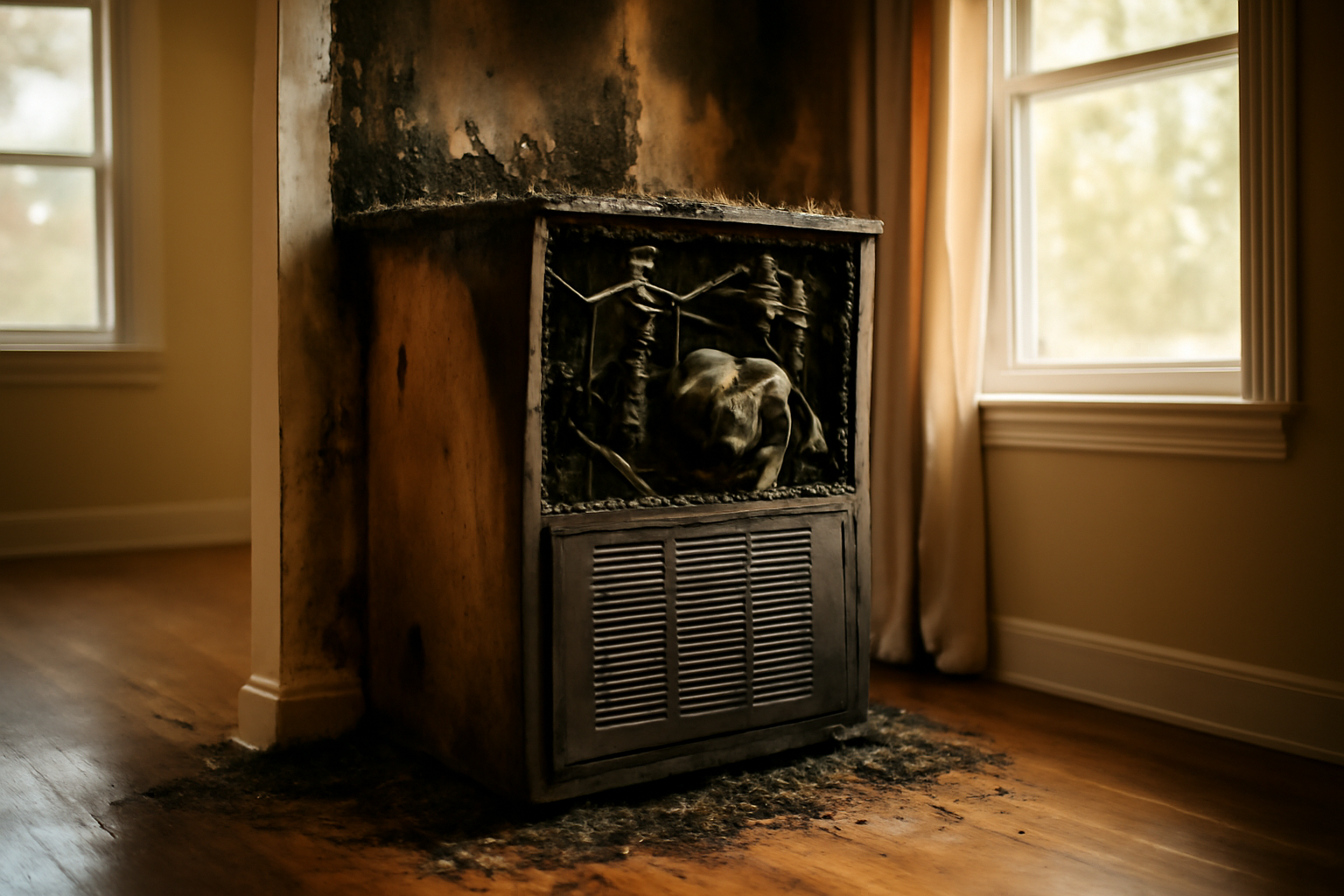
After a fire, even if it seemed small, hidden damage can linger in your heating system. Recognizing these subtle signs early can save you from much bigger headaches down the road. Ignoring them could mean dealing with health risks or system failure.
Lingering Smoke Odors
Even after initial cleanup, if you continue to detect a persistent smoky or acrid smell when your heating system runs, it’s a major red flag. Soot and smoke particles may still be trapped deep within the system, ready to be recirculated. This is a clear indicator that your HVAC needs professional attention.
Visible Soot or Ash Residue
If you notice any black or grey powdery residue on or around your furnace, vents, or ductwork, it means soot has infiltrated the system. This residue is corrosive and can damage metal components over time. You need immediate cleaning to prevent further degradation.
Strange Noises from the Unit
Unusual sounds like grinding, rattling, or squealing when your furnace kicks on can indicate internal damage. Fire can warp metal components or dislodge insulation, creating new obstructions or stress points. These sounds are your system’s way of telling you something is wrong, requiring urgent assessment.
Reduced Airflow or Uneven Heating
If you’re experiencing weaker airflow from your vents or your home isn’t heating evenly, it could be due to soot buildup or minor damage within the ductwork or fan. These blockages impede the efficient circulation of warm air. Addressing this promptly ensures consistent warmth.
Discolored or Damaged Ductwork
Take a look at your accessible ductwork. If you see any signs of charring, warping, or discoloration, it’s a direct result of fire and heat exposure. Damaged ducts compromise your system’s integrity and can be a source of air leaks. This requires specialized repair.
Frequent System Cycling or Failure to Ignite
If your furnace is cycling on and off more than usual, or if it’s struggling to ignite, internal damage from the fire could be the culprit. Electrical components or ignition systems might be compromised. These are critical signs that your system is unsafe and needs expert inspection.
Heating Equipment Fire Restoration vs. DIY: When To Call a Professional
| Situation | DIY? | Call a Pro? | Why |
|---|---|---|---|
| Wiping down accessible surfaces of the furnace exterior with a damp cloth | Yes, if minimal soot is visible and the system is completely cool and unplugged. | No | For minor cosmetic soot removal, careful wiping is usually safe. |
| Cleaning accessible vent covers | Yes, for light dust and grime. | No | Vent covers are typically removable and easy to clean. |
| Deodorizing with household air fresheners | No | Yes | Household products mask odors temporarily and don’t address the root cause. |
| Inspecting the internal components of the furnace for soot or damage | No | Yes | Internal components are complex, dangerous, and require specialized knowledge to inspect safely and accurately. |
| Cleaning soot from the blower motor or heat exchanger | No | Yes | These parts are critical, intricate, and prone to damage if not cleaned by trained technicians with proper equipment. |
| Testing the safety controls and ignition system after a fire event | No | Yes | Safety systems are paramount; improper testing can be dangerous and lead to system malfunction or fire hazards. |
For anything beyond the most superficial cleaning of external surfaces, calling a professional is essential. The intricate nature of heating systems and the corrosive properties of fire residue demand specialized tools and knowledge. Trusting your system to experts ensures it’s not only clean but also safe to operate.
Heating Equipment Fire Restoration Cost In Conroe, TX
The cost of heating equipment fire restoration in Conroe, TX, can vary significantly. Factors like the size and type of your heating system, the extent of smoke and soot damage, and the complexity of the necessary repairs all play a role. These figures represent general estimates, not exact quotes.
| Service | Typical Price Range | What Affects Cost |
|---|---|---|
| Initial Inspection and Damage Assessment | $200 – $500 | System complexity and accessibility of the damage. |
| Soot and Smoke Removal (Furnace Unit) | $500 – $2,500 | Severity of soot buildup and the number of components needing cleaning. |
| HVAC System Deodorization | $300 – $1,200 | The intensity of odors and the size of the HVAC system. |
| Air Duct Cleaning | $400 – $1,500 | Linear footage of ductwork and the amount of soot/debris present. |
| Component Testing and Minor Repair | $200 – $800 | Number of parts needing testing and any minor adjustments required. |
| Full System Restoration and Reassembly | $1,000 – $4,000+ | Overall scope of damage, replacement of minor parts, and labor involved. |
An on-site assessment is always necessary for an accurate quote. We offer free estimates to provide you with clarity on the investment needed to restore your heating system. Let us provide a detailed breakdown for your specific situation.
Service Areas Near Conroe, TX
Willis, New Caney, Porter, Splendora, Cleveland, Huffman, Shepherd, Magnolia, Tomball, Spring, The Woodlands, Montgomery, Oak Ridge North, Shenandoah, Woodbranch, Roman Forest, Grangerland, Peach Creek, Conroe, Humble
Common Questions About Heating Equipment Fire Restoration
My furnace had a small fire, but it seems okay now. Do I really need professional inspection?
Yes, absolutely. Even small fires can leave behind corrosive soot and smoke residue that isn’t visible to the naked eye. This residue can degrade metal components over time, leading to premature system failure or even future safety hazards. Our team uses specialized tools to detect and remove these hidden threats, ensuring your furnace is truly safe and functional.
How long does heating equipment fire restoration typically take?
The timeline varies greatly depending on the severity of the fire damage. Minor soot cleanup might take a day or two, while extensive damage requiring full system cleaning and deodorization could take several days to a week. We focus on efficient restoration without cutting corners, aiming to get your heat back online as quickly as possible. You’ll receive a projected timeline after our initial assessment.
Is it safe to breathe air from my HVAC system after a fire?
It’s generally not safe to breathe air from your HVAC system after a fire until it has been professionally inspected and cleaned. Smoke particles and soot are harmful irritants and can worsen respiratory conditions. We conduct thorough air quality testing and deep cleaning to ensure the air circulating through your home is healthy and clean.
What kind of equipment do you use to clean fire-damaged HVAC systems?
We use a range of professional-grade equipment, including industrial HEPA vacuums for dry soot removal, specialized chemical cleaning agents for wet smoke, thermal foggers and ozone generators for deep deodorization, and advanced moisture meters for any water-related damage. Our technicians are trained to use these tools effectively to restore your system safely. This advanced equipment is key to thorough restoration.
Can I prevent fire damage to my heating equipment?
Regular maintenance is the best defense against heating equipment fires. This includes annual inspections by a qualified technician, keeping the area around your furnace clear of flammable materials, and ensuring your smoke detectors are working. While some fires are unavoidable, proper upkeep significantly reduces the risk. We can offer advice on preventative measures during our service calls.
Check Our Other Relevant Services

Gary Gwin: Damage Restoration Expert
With over 20 years of hands-on experience, Gary Gwin is a trusted authority in property recovery and disaster mitigation. As a licensed specialist, Gary has dedicated his career to restoring safety and peace of mind for homeowners facing environmental crises.
𝗖𝗲𝗿𝘁𝗶𝗳𝗶𝗰𝗮𝘁𝗶𝗼𝗻𝘀: Gary holds multiple advanced IICRC certifications, including Water Damage Restoration (WRT), Applied Microbial Remediation (Mold), Applied Structural Drying (ASD), Odor Control, and Fire and Smoke Restoration. His deep technical knowledge ensures every project meets the highest industry standards for health and safety.
𝗕𝗲𝘀𝘁 𝗣𝗮𝗿𝘁 𝗼𝗳 𝘁𝗵𝗲 𝗝𝗼𝗯: Gary finds the most fulfillment in guiding families through the recovery process, transforming a chaotic property loss into a restored, habitable home.
𝗙𝗮𝘃𝗼𝗿𝗶𝘁𝗲 𝗣𝗮𝘀𝘁𝗶𝗺𝗲: When off the clock, Gary enjoys exploring local hiking trails and woodworking.