Trusted by 150+ Homeowners
Heating Equipment Fire Restoration in Liberty, TX
- Over 152 5-Star Reviews
- Free Estimates and Quotes
- 100% Satisfaction Guaranteed
- Child, Family & Pet Safe Steps
- 24-Hour Emergency Service
- Fully Licensed & Insured

When Your Heater Sparks Trouble in Liberty, TX
Here in Liberty, TX, we know how critical your heating system is, especially when those cooler coastal breezes roll in. Sometimes, though, a faulty furnace or water heater can turn into a real emergency. That’s when you need immediate help to address the fire damage and get your home safe again. Ignoring even small signs can lead to significant property damage and create a serious safety hazard.
We’ve helped over 165 of your neighbors in the area recover from unexpected emergencies, and we’re proud of the trust they’ve placed in us. When it comes to heating equipment fires, you want a team that understands the unique challenges and can restore your home efficiently. That’s why so many local homeowners turn to us for reliable emergency response and thorough fire damage cleanup.
- We specialize in safely removing smoke odor and soot from your HVAC system, preventing it from spreading throughout your house.
- Our team can expertly assess and clean or replace damaged heating components, ensuring your system is safe to operate again.
- We handle the careful cleanup and restoration of affected areas, so you can get back to feeling comfortable and secure in your home.
How Heating Equipment Fire Restoration Actually Works
When your heating equipment has a fire, it’s not just about cleaning up the visible mess. It’s a multi-step process that requires specialized knowledge and equipment to truly restore your home and prevent future issues. Cutting corners here can leave behind hidden damage or lingering smoke odor, which is why our methodical approach is so important. We focus on getting it right the first time, ensuring your property is safely returned to its pre-fire condition.
Initial Damage Assessment
The first thing our crews do is a thorough inspection of the fire’s origin and spread, paying close attention to the heating unit itself and surrounding structures. We’ll identify all affected materials and assess the extent of the damage to create a clear plan. This initial walkthrough is crucial for accurate damage evaluation and effective restoration planning.
Safety and Containment
Your family’s safety is our top priority. We’ll ensure the area is secure, shutting off affected utilities if necessary and setting up containment barriers to prevent soot and odor from spreading. This step is vital for protecting your health and limiting further contamination.
Soot and Smoke Removal
This is where specialized techniques come into play. We use advanced equipment to carefully remove soot and smoke residue from all surfaces, including walls, ceilings, and your HVAC system components. Our goal is to eliminate all traces of the fire and its smell, ensuring a truly clean and healthy environment.
Odor Neutralization
Smoke odor can be incredibly persistent. We employ professional-grade deodorizing treatments and equipment to neutralize odor molecules at their source, not just mask them. This process can take time but is essential for complete odor elimination and restoring the air quality in your home.
Restoration and Repair
Once everything is cleaned and deodorized, we move into the repair phase. This could involve repairing or replacing damaged drywall, insulation, electrical components, or even parts of your heating system itself. We work diligently to restore your property’s integrity and functionality.
Don’t let a heating equipment fire leave you with lasting problems. Call us today to get your home back to normal.
Warning Signs You Need Heating Equipment Fire Restoration
Sometimes, the damage from a heating equipment fire isn’t immediately obvious, or it starts small and gets worse. Catching these warning signs early can save you a lot of headaches and expense down the line. Keep an eye and nose out for these indicators that something isn’t right with your heating system.
Musty or Burning Smells
A persistent musty or acrid burning smell, especially when your heating system kicks on, is a big red flag. It often indicates that something is overheating or has recently been damaged. Don’t ignore unusual odors from your vents.
Visible Soot or Ash
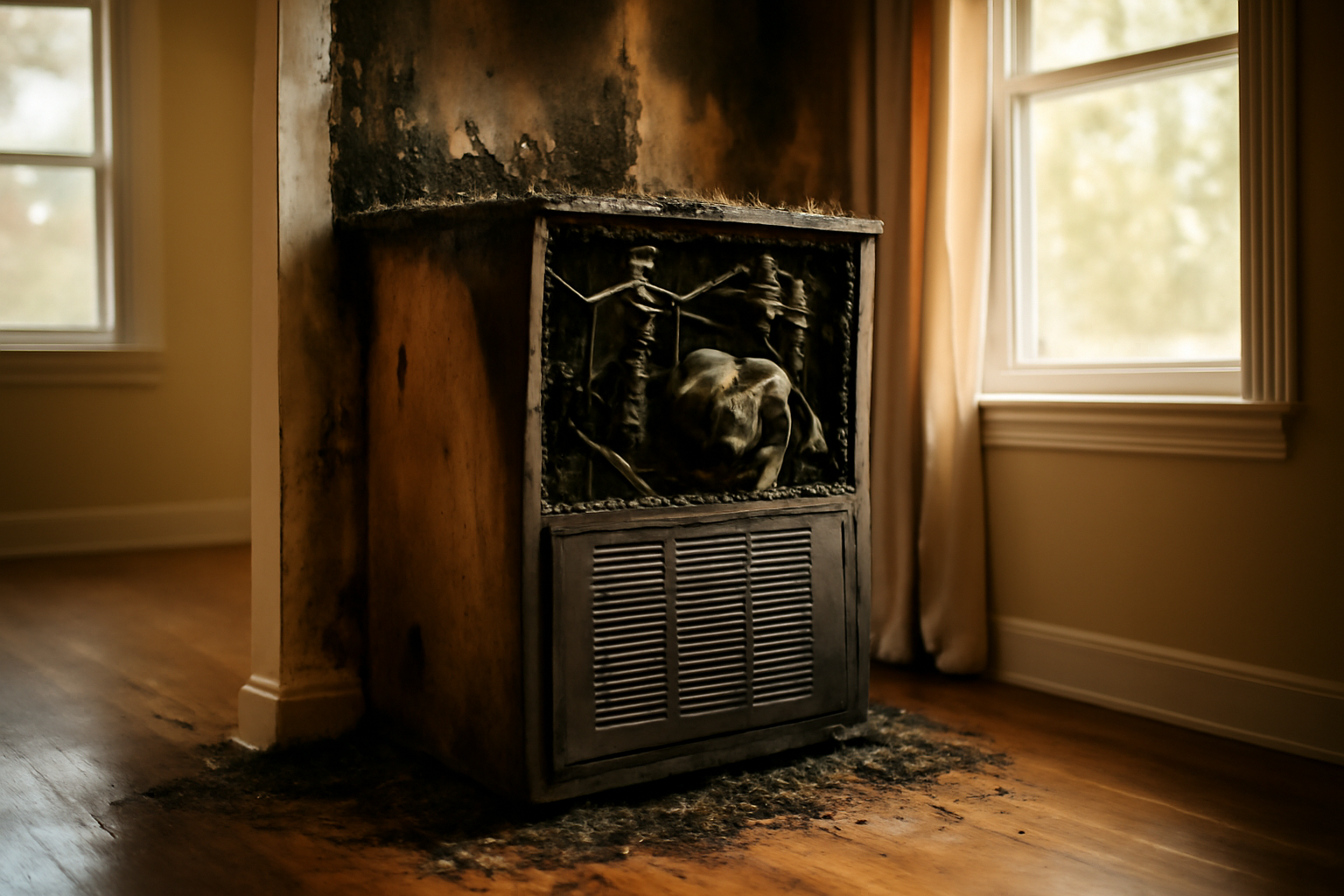
If you notice any black soot or ash buildup around your furnace, water heater, or vents, it’s a clear sign of a combustion issue or a past fire. This residue can be harmful and indicates potential fire hazards.
Electrical Issues or Flickering Lights
Problems with your heating system’s electrical components can lead to sparks and fires. If you’re experiencing flickering lights or tripping breakers when the heat runs, it’s a serious sign of electrical system failure.
Strange Noises from the Unit
Grinding, buzzing, or popping sounds coming from your heating equipment can indicate internal mechanical problems that could escalate. These noises often signal mechanical distress that needs immediate attention.
Pilot Light Issues or Yellow Flame
A healthy pilot light should be blue. If yours is yellow, flickering erratically, or frequently goes out, it suggests incomplete combustion, which can be a fire risk. Pay attention to abnormal pilot light behavior.
Water Damage Around Heating Unit
For water heaters, leaks or water damage around the base can indicate internal issues that might have led to a fire or could in the future. This suggests potential component failure.
Heating Equipment Fire Restoration vs. DIY: When To Call a Professional
| Situation | DIY? | Call a Pro? | Why |
|---|---|---|---|
| Minor soot on a non-critical exterior surface of the unit | Yes, with caution | No | For very minor, surface-level soot, careful wiping might be sufficient, but proceed with extreme care. |
| Lingering smoke odor in a single room | Maybe, with specific products | Yes | Persistent odors require professional-grade treatments to neutralize, not just mask them. |
| Visible charring or damage to heating components (furnace, water heater) | Absolutely Not | Yes | Damaged components are a major safety risk and require expert assessment and repair or replacement. |
| Soot and smoke residue inside HVAC ductwork | Absolutely Not | Yes | Contaminated ductwork can spread soot and odor throughout your entire home; professional cleaning is essential. |
| Electrical shorts or sparks observed near the heating unit | Absolutely Not | Yes | Electrical fires are extremely dangerous and require immediate attention from trained professionals. |
| Concern about the safety of the heating system after a fire event | No | Yes | When in doubt, always call a professional to ensure your system is safe to operate again. |
For any situation involving visible damage, persistent odors, or concerns about your system’s safety after a fire, calling a professional is always the smartest choice. Our trained technicians have the specialized knowledge and equipment to handle these complex issues effectively.
Heating Equipment Fire Restoration Cost in Liberty, TX
The cost for heating equipment fire restoration in Liberty, TX, can vary greatly depending on the severity of the fire, the size of the affected area, and the complexity of the damage. These figures are estimates to give you an idea, not exact quotes. We always provide a detailed estimate after an on-site assessment.
| Service | Typical Price Range | What Affects Cost |
|---|---|---|
| Initial Inspection and Assessment | $300 – $1,000 | The complexity and extent of the damage found. |
| Soot and Smoke Cleanup (per room) | $500 – $2,500 | The amount of soot, type of surfaces, and accessibility. |
| HVAC System Cleaning | $750 – $3,000 | The size of the system and how much ductwork needs cleaning. |
| Odor Neutralization | $400 – $2,000 | The intensity of the odor and the methods required. |
| Minor Repairs (e.g., drywall patching) | $300 – $1,500 | The scope and materials needed for repairs. |
| Replacement of Damaged Heating Components | Varies (part cost + labor) | The specific part needed and labor involved. |
To get an accurate price for your specific situation, we offer free, no-obligation estimates. Contact us so we can assess the damage and provide a detailed breakdown of the costs.
Service Areas Near Liberty, TX
Liberty, Cleveland, Dayton, Huffman, Crosby, Mont Belvieu, Baytown, Highlands, Anahuac, Stowell, Hankamer, Winnie, High Island, Crystal Beach, Galveston, Texas City, La Marque, Santa Fe, League City, Friendswood.
Common Questions About Heating Equipment Fire Restoration
What should I do immediately after a heating equipment fire?
First and foremost, ensure everyone is safely out of the home and call the fire department if they haven’t already cleared the scene. Avoid re-entering the damaged area until it’s deemed safe by professionals. Don’t attempt to turn on the damaged heating unit. We recommend contacting us right away to begin the assessment and mitigation process, preventing further damage.
How long does heating equipment fire restoration take?
The timeline can vary significantly. Minor incidents might be resolved in a few days, while more extensive damage could take weeks. Factors like the size of the fire, the materials affected, and the complexity of odor removal play a big role. We’ll give you a more precise timeline after our initial damage assessment.
Is smoke damage from a heater harmful to my health?
Yes, smoke damage and soot residue can contain harmful chemicals and irritants. Inhaling them can cause respiratory issues, allergic reactions, and other health problems. It’s crucial to have the affected areas professionally cleaned and deodorized to ensure a healthy indoor environment.
What kind of equipment do you use for smoke and odor removal?
Our crews utilize a range of specialized equipment, including industrial air scrubbers with HEPA filters, ozone generators, thermal foggers, and advanced cleaning agents. These tools are designed to capture fine soot particles and neutralize odor molecules at their source, ensuring a thorough and effective cleanup.
Can I prevent fires from my heating equipment?
Regular maintenance is key. Have your heating system inspected annually by a qualified technician, change your air filters regularly, and keep the area around your furnace or water heater clear of flammable materials. Following these steps can significantly reduce the risk of fire and keep your system running safely.
Check Our Other Relevant Services
Serving Liberty, TX And Nearby Areas