Trusted by 150+ Homeowners
HVAC Mold Remediation in Iowa Colony, TX
- Over 152 5-Star Reviews
- Free Estimates and Quotes
- 100% Satisfaction Guaranteed
- Child, Family & Pet Safe Steps
- 24-Hour Emergency Service
- Fully Licensed & Insured
Breathe Easier: Expert HVAC Mold Remediation in Iowa Colony, TX
You just turned on your air conditioning, and instead of cool air, a faint, unpleasant smell drifts into your living room. It’s a musty, earthy odor that seems to be coming from your vents. You check your air filter, but that’s not it. This smell, this persistent dampness in the air, is a clear sign that mold might be thriving inside your HVAC system, silently spreading throughout your home in Iowa Colony, TX. It’s a disturbing thought, and you need to address it immediately.
We understand how concerning this discovery can be. That’s why so many homeowners around here trust our team for their HVAC mold remediation needs. We’ve helped over 165+ families in your neighborhood restore their indoor air quality, and we’re ready to help you too. Our goal is to get your system clean and your home healthy again, fast and effectively.
- Eliminate hidden mold growth deep within your ductwork, preventing its spread to other parts of your home.
- Improve your indoor air quality dramatically, reducing allergens and potential health risks associated with mold exposure.
- Restore your HVAC system’s efficiency, ensuring it runs smoothly and delivers clean, comfortable air without that lingering musty smell.
How Our HVAC Mold Remediation Process Works
Dealing with mold in your HVAC system requires a methodical, science-based approach. Simply cleaning the visible parts isn’t enough. Our crews follow strict protocols, using specialized equipment to locate, contain, and eliminate mold, and then ensure the environment is dry. Cutting corners here means the mold will likely return, costing you more time and money down the line. We take this very seriously.
1. Initial Inspection and Moisture Assessment
We begin with a thorough inspection of your entire HVAC system, including the air handler, coils, and ductwork. Our technicians use advanced moisture meters and visual checks to pinpoint exactly where mold is present and identify the source of any excess moisture. This initial assessment is crucial for effective treatment.
2. Containment of the Affected Area
Before any cleaning begins, we establish containment barriers. This prevents mold spores from spreading into other living areas of your home during the remediation process. We use negative air pressure and specialized sealing techniques to ensure complete spore containment.
3. Mold Removal and Cleaning
Our trained technicians use EPA-approved antimicrobial treatments and specialized cleaning tools designed for HVAC systems. We carefully clean all affected components, including evaporator coils, drain pans, and duct interiors. This step ensures all visible mold is eradicated.
4. Drying and Dehumidification
After cleaning, we use industrial-grade dehumidifiers and air movers to thoroughly dry the system and surrounding areas. Controlling moisture is key to preventing mold recurrence. We monitor humidity levels closely to ensure optimal drying conditions.
5. System Testing and Verification
Once the system is clean and dry, we perform final checks. This includes testing airflow and ensuring all components are functioning correctly. We’ll often use specialized equipment to verify that mold spore counts have returned to normal, confirming your system is healthy.
Don’t let mold in your air ducts compromise your home’s air quality. Call us today to schedule your HVAC mold remediation service!

Warning Signs You Need HVAC Mold Remediation
Catching mold in your HVAC system early can save you from more extensive damage and potential health issues. Your system works hard to keep your home comfortable, but it can also become a breeding ground for mold if conditions are right. Being aware of the signs is your first line of defense.
Musty Odors That Won’t Go Away
The most common indicator is a persistent musty or earthy smell that seems to emanate from your vents, especially when the AC or heat first kicks on. This smell is often mold releasing spores into the air, and it’s a strong signal for inspection.
Visible Mold Growth
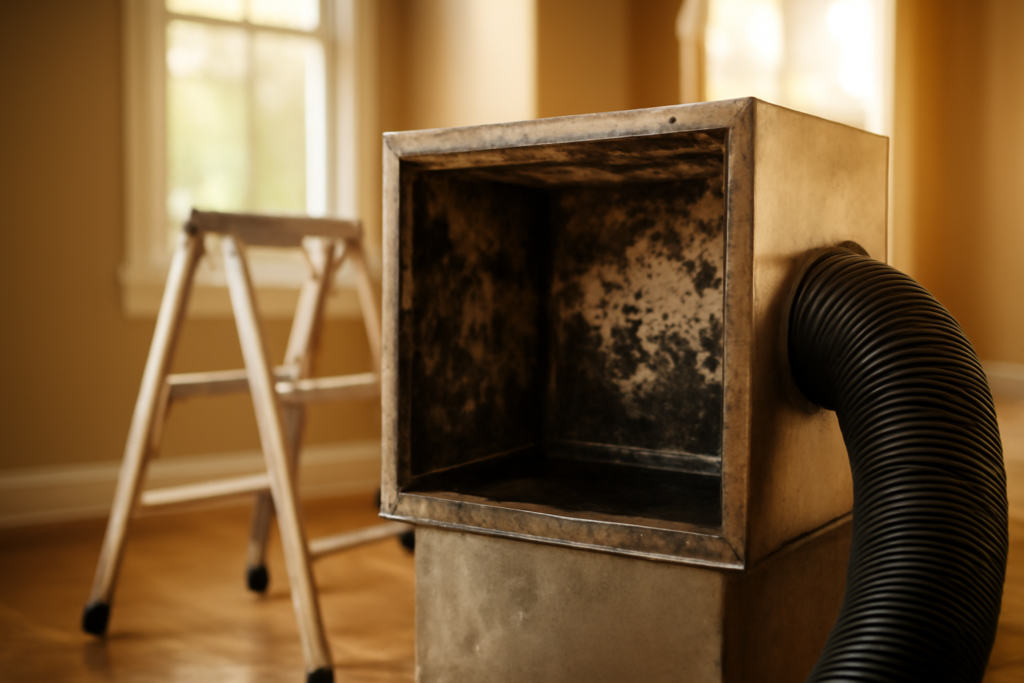
While often hidden, mold can sometimes be seen as fuzzy or slimy patches of black, green, or white growth on surfaces within your air handler, on ductwork, or around vents. If you spot any discoloration, it’s a clear sign of a problem.
Health Symptoms Worsening Indoors
Are you or your family experiencing increased allergy symptoms, headaches, respiratory issues, or skin irritation when you’re at home, but these symptoms improve when you leave? This could indicate that mold spores are circulating through your HVAC system, and it’s time for a check-up.
Water Leaks or High Humidity Around the HVAC Unit
Any signs of water leaks, condensation buildup, or unusually high humidity levels around your air handler, in the attic, or near ductwork can create the perfect environment for mold to grow. This often points to a moisture problem needing immediate attention.
Unexplained Dampness in Ducts or Vents
If you notice dampness or a clammy feeling inside your air ducts or around your vent covers, it suggests moisture is present, which can quickly lead to mold growth. This condition requires professional assessment and drying.
Discolored or Damaged Ductwork
Over time, mold growth can cause discoloration or even physical damage to the interior surfaces of your ductwork. If you can see staining or deterioration, it’s likely mold has been present for a while and needs expert remediation.
HVAC Mold Remediation vs. DIY: When To Call a Professional
| Situation | DIY? | Call a Pro? | Why |
|---|---|---|---|
| Small, visible spot of mold on an accessible exterior surface of a duct. | Yes, with proper safety gear and cleaning agents. | No, unless it’s spreading or you’re unsure. | Small spots are manageable, but larger or hidden issues need professional tools. |
| Musty smell when the AC runs, but no visible mold. | No. | Yes, immediately. | The smell indicates hidden growth deep within the system, requiring specialized detection. |
| Mold growth inside the air handler unit (coils, drain pan). | No, this area is often difficult to access and clean effectively. | Yes. | These components are critical for air quality and require specialized cleaning to avoid damage. |
| Mold covering a significant portion of ductwork interior. | Absolutely not. | Yes, without delay. | Extensive mold requires professional containment and removal to prevent spore dispersal. |
| Suspected mold after a water intrusion event affecting the HVAC system. | No. | Yes, right away. | Water damage creates ideal conditions for rapid mold growth, demanding immediate professional intervention. |
| Routine filter change reveals slight discoloration on filter. | Yes, replace filter and monitor. | No, unless the smell or symptoms persist. | Filters are designed to catch particulates; slight discoloration may be normal, but persistent issues warrant a check. |
For anything beyond a tiny, superficial spot, professional HVAC mold remediation is the safest and most effective choice. Our team has the training, equipment, and experience to handle the complexities of your HVAC system, ensuring thorough mold removal and air quality restoration.
HVAC Mold Remediation Cost in Iowa Colony, TX
The cost of HVAC mold remediation in Iowa Colony, TX can vary significantly. Factors like the extent of mold growth, the size and type of your HVAC system, and the accessibility of affected areas all play a role. These prices are estimates and can change based on your specific situation.
| Service | Typical Price Range | What Affects Cost |
|---|---|---|
| HVAC System Mold Inspection | $200 – $500 | Complexity of system, need for specialized testing equipment. |
| Ductwork Cleaning and Mold Removal (Standard System) | $700 – $2,500 | Length and complexity of duct runs, severity of mold infestation. |
| Air Handler Unit Cleaning (Coils, Drain Pan) | $300 – $800 | Accessibility of the unit, amount of mold present. |
| Antimicrobial Treatment Application | $150 – $400 | Area treated, type of treatment used. |
| Post-Remediation Air Quality Testing | $250 – $600 | Number of samples taken, laboratory fees. |
| Emergency HVAC Mold Remediation Service | +20% – 50% surcharge | Time of day, day of week, required immediate response. |
An on-site assessment is the best way to get an accurate estimate tailored to your home’s specific needs. We offer free, no-obligation estimates for all HVAC mold remediation services.
Service Areas Near Iowa Colony, TX
Alvin, Angleton, Arcola, Baytown, Bellaire, Brazoria, Clute, Corpus Christi, Cypress, Deer Park, Dickinson, Friendswood, Galena Park, Galveston, Houston, Humble, Jacinto City, Katy, La Marque, La Porte, League City, Manvel, Missouri City, Pasadena, Pearland, Port Arthur, Port Bolivar, Richmond, Rosenberg, Santa Fe, Seabrook, South Houston, Sugar Land, Texas City, The Woodlands, Webster, West Columbia, Wharton.
Common Questions About HVAC Mold Remediation
What are the health risks of mold in my AC system?
Mold spores circulating through your HVAC system can trigger allergic reactions, asthma attacks, and other respiratory problems. Symptoms can include coughing, sneezing, itchy eyes, and difficulty breathing. For those with compromised immune systems, these risks are even higher. Our team works to ensure your system is free of harmful mold.
How long does HVAC mold remediation take?
The timeline depends on the severity of the mold and the size of your HVAC system. A typical remediation process for moderate mold growth can take anywhere from one to three days. We aim for efficiency without compromising thoroughness.
Will insurance cover HVAC mold remediation?
Coverage varies greatly depending on your specific insurance policy and the cause of the mold. Often, mold caused by sudden, accidental water damage is covered, but mold due to long-term moisture issues or poor maintenance may not be. We recommend checking with your provider, and we can provide documentation to assist you. Our goal is to help you get your home back to normal, regardless of the cause.
What equipment do you use to remove mold from HVAC systems?
We utilize a range of specialized equipment, including HEPA vacuums for spore containment, industrial-grade dehumidifiers and air movers for drying, and EPA-registered antimicrobial solutions for cleaning. We also use boroscopes and other diagnostic tools to inspect hard-to-reach areas. This advanced equipment ensures a complete and effective remediation.
Can I prevent mold from growing in my HVAC system in the future?
Yes, regular maintenance is key. This includes changing your air filters regularly, ensuring your AC unit is properly drained to prevent standing water, and addressing any leaks or condensation issues promptly. Maintaining optimal humidity levels in your home also helps. We can offer advice on best practices to keep your system healthy, preventing future mold problems.
Check Our Other Relevant Services

Gary Gwin: Damage Restoration Expert
With over 20 years of hands-on experience, Gary Gwin is a trusted authority in property recovery and disaster mitigation. As a licensed specialist, Gary has dedicated his career to restoring safety and peace of mind for homeowners facing environmental crises.
𝗖𝗲𝗿𝘁𝗶𝗳𝗶𝗰𝗮𝘁𝗶𝗼𝗻𝘀: Gary holds multiple advanced IICRC certifications, including Water Damage Restoration (WRT), Applied Microbial Remediation (Mold), Applied Structural Drying (ASD), Odor Control, and Fire and Smoke Restoration. His deep technical knowledge ensures every project meets the highest industry standards for health and safety.
𝗕𝗲𝘀𝘁 𝗣𝗮𝗿𝘁 𝗼𝗳 𝘁𝗵𝗲 𝗝𝗼𝗯: Gary finds the most fulfillment in guiding families through the recovery process, transforming a chaotic property loss into a restored, habitable home.
𝗙𝗮𝘃𝗼𝗿𝗶𝘁𝗲 𝗣𝗮𝘀𝘁𝗶𝗺𝗲: When off the clock, Gary enjoys exploring local hiking trails and woodworking.