Trusted by 150+ Homeowners
Mold Inspection & Testing in Aldine, TX
- Over 152 5-Star Reviews
- Free Estimates and Quotes
- 100% Satisfaction Guaranteed
- Child, Family & Pet Safe Steps
- 24-Hour Emergency Service
- Fully Licensed & Insured
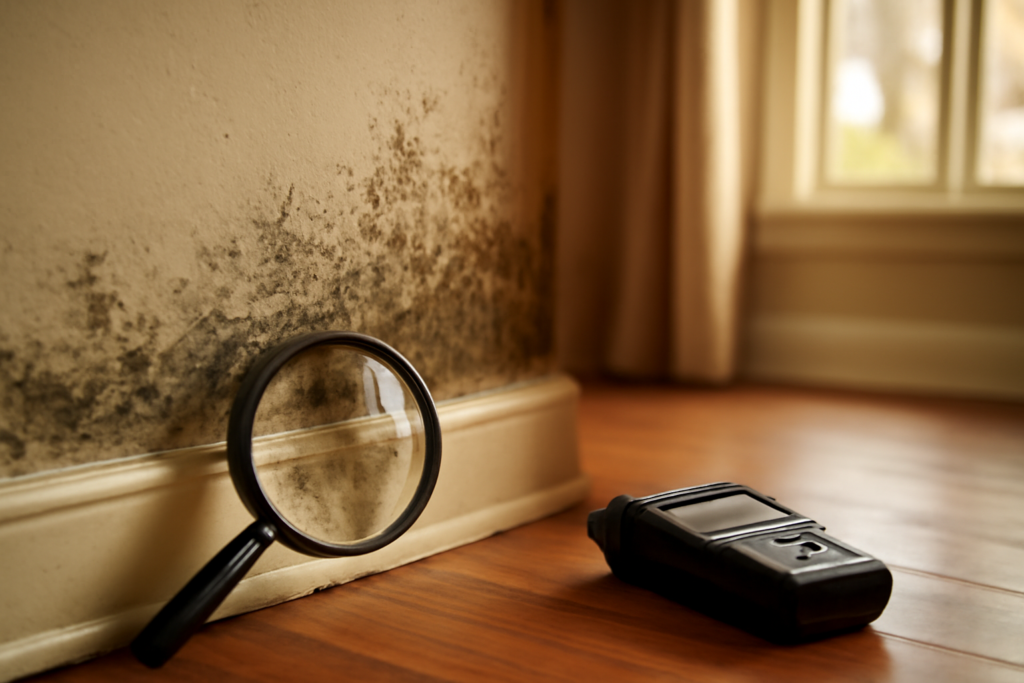
Your Aldine, TX Home Might Have Hidden Mold: We’ll Find It
You walk into your bathroom after a long day, and there it is. A faint, yet undeniable, musty smell hangs in the air. You look up, and a small, dark spot you didn’t notice before is spreading on your ceiling. It’s a sinking feeling, knowing that where there’s visible mold, there’s often a much larger, unseen problem lurking behind your walls. This isn’t just about aesthetics; it’s about your home’s health and your family’s well-being. We understand that discovering potential mold growth can be unnerving, and you need to know exactly what’s going on, fast. That’s why we focus on precise Mold Inspection & Testing right here in Aldine, TX.
Our local homeowners trust us because we get to the root of mold issues. We’ve earned over 165 five-star reviews from neighbors who relied on our thorough approach to identify and assess mold problems. When you call us, you’re not just getting a quick look; you’re getting a detailed investigation that gives you the real story about your property’s condition. We’re dedicated to providing clear answers and actionable insights for your home.
- We use advanced tools to pinpoint hidden mold colonies you can’t see, ensuring a complete assessment.
- Our detailed reports explain exactly what we found, where it is, and what it means for your home’s health.
- We provide the crucial data you need to make informed decisions about remediation, preventing future growth.
The Science Behind Our Mold Inspection & Testing Process
When it comes to mold, a superficial glance just won’t cut it. True mold inspection and testing involve more than just spotting visible patches. Our team employs a systematic, science-based approach to uncover the full extent of any mold contamination. We use specialized equipment to measure moisture levels, identify airborne spores, and locate hidden growth that can be actively damaging your home. Cutting corners here means the mold problem will likely return, causing more damage and costing you more in the long run. We’re committed to a thorough, methodical process from start to finish.
Initial Property Assessment
We begin by walking through your property to note any visible signs of water damage or mold growth. This initial survey helps us understand potential problem areas and guides our subsequent testing. We’re looking for clues that indicate moisture intrusion, a key factor in mold development. This step is about observation and setting the stage for more detailed investigation.
Moisture Meter Readings
Using calibrated moisture meters, we measure the water content within building materials like drywall, wood, and insulation. Elevated moisture levels, even if the surface appears dry, are a strong indicator of hidden water sources and potential mold growth. This technology is crucial for finding problems behind walls or under flooring. We document these readings to create a clear picture of your home’s moisture profile.
Air Sampling and Analysis
Air sampling is vital for detecting mold spores that aren’t visible to the naked eye. We collect air samples from different areas of your home and send them to an independent, accredited laboratory for analysis. This tells us the type and concentration of mold spores present, helping us understand the severity of the contamination and potential health risks. The lab results provide objective data about your indoor air quality.
Surface Sampling (Swabs and Tape Lifts)
When we see suspicious spots or suspect mold on a surface, we collect samples using sterile swabs or tape lifts. These samples are also sent to the lab for microscopic identification. This confirms whether a visible stain is indeed mold and helps identify the specific species. Knowing the type of mold can be important for understanding its potential impact and developing the right remediation plan.
Detailed Reporting and Recommendations
After all testing is complete, we compile a comprehensive report. This document details our findings, including moisture readings, air sample results, and surface sample analyses. It clearly outlines the extent of any mold contamination and provides professional recommendations for remediation. You’ll receive clear, easy-to-understand information about your home’s condition and the next steps.
Don’t let mold threats linger. Call us today for a precise and thorough inspection to protect your home and family.

Warning Signs You Need Mold Inspection & Testing
Catching mold early is key to minimizing damage and health risks. Sometimes, the signs are obvious, but other times, mold hides where you can’t see it. Paying attention to these subtle clues can save you significant trouble down the road. Ignoring these indicators can lead to more extensive mold growth and costly repairs.
Musty Odors That Won’t Go Away
A persistent, musty smell, especially in damp areas like bathrooms, basements, or attics, is a classic sign of mold. Even if you can’t see any visible mold, that smell means it’s likely growing somewhere. This odor often indicates hidden mold colonies that need to be found and addressed immediately.
Visible Mold Growth
This is the most obvious sign. You might see black, green, white, or orange fuzzy or slimy patches on walls, ceilings, floors, or even furniture. Even small spots can indicate a larger problem behind the surface. Any visible mold should prompt a professional inspection to determine its extent.
Water Damage or Past Flooding
If your property has experienced any water damage, leaks, or flooding, even if it seemed to dry out, mold can still develop. Materials like drywall, insulation, and carpet can trap moisture, creating a perfect breeding ground for mold within days. It’s wise to get an inspection after any significant water event.
Peeling or Bubbling Paint and Wallpaper
Moisture trapped behind paint or wallpaper can cause it to blister, peel, or warp. This is often a sign that water is seeping into the building materials, creating an environment where mold can thrive. Such damage warrants a closer look to check for underlying moisture issues.
Worsening Allergy Symptoms
If you or your family members experience increased allergy symptoms like sneezing, itchy eyes, coughing, or skin rashes, and these symptoms improve when you leave the house, mold could be the culprit. Mold spores are common allergens that can significantly impact indoor air quality. We can test your air to see if mold is contributing to these health issues.
Condensation on Windows or Pipes
Excessive condensation can indicate high humidity levels inside your home, which can lead to mold growth. If you notice persistent condensation on windows, pipes, or exterior walls, it’s a sign that moisture isn’t being managed properly. This creates conditions ripe for mold to take hold.
Mold Inspection & Testing vs. DIY: When To Call a Professional
| Situation | DIY? | Call a Pro? | Why |
|---|---|---|---|
| Suspecting mold due to musty smell | Yes, for initial observation | Yes, for confirmation and testing | DIY observation is a starting point, but professional testing confirms presence, type, and extent. |
| Seeing small, visible mold spots on a hard surface | Yes, for minor cleaning with appropriate products | Yes, if the area is larger than 1 square foot or if you have health concerns | Large or spreading mold requires professional containment and removal to prevent spore release. |
| After a minor water leak (e.g., sink overflow) | Yes, for immediate cleanup and drying | Yes, if water saturated porous materials (drywall, carpet) or if drying is incomplete | Hidden moisture in building materials can lead to mold growth even after visible water is gone. |
| Dealing with significant water damage or flooding | No | Yes, immediately | Extensive water damage requires specialized drying equipment and professional mold assessment to prevent widespread issues. |
| Experiencing recurring allergy or respiratory symptoms | Yes, try improving ventilation | Yes, for air quality testing | Professional testing can identify mold as the source of your symptoms and guide remediation. |
| Wanting a baseline assessment of indoor air quality | No | Yes, for professional testing | DIY air quality monitors are often unreliable; professional sampling provides accurate, lab-verified data. |
While some minor surface mold can be cleaned by a homeowner, professional Mold Inspection & Testing is crucial for anything beyond the very smallest spots. It’s about getting accurate identification and understanding the full scope of the problem, especially when mold is hidden or extensive. Don’t guess when it comes to your home’s health.
Mold Inspection & Testing Cost in Aldine, TX
The cost for Mold Inspection & Testing in Aldine, TX can vary. Generally, you can expect an inspection and testing service to range from a few hundred dollars to over a thousand. Factors influencing the price include the size of your property, the complexity of the suspected mold issue, the number of samples needed for lab analysis, and the specific equipment required for thoroughness. We always aim to provide a clear, upfront estimate once we understand your situation.
Service Areas Near Aldine, TX
Humble, Houston, Spring, Cypress, Tomball, The Woodlands, Conroe, Kingwood, Pasadena, La Porte, Baytown, League City, Pearland, Sugar Land, Missouri City, Stafford, Katy, Richmond, Rosenberg, Alvin.
Common Questions About Mold Inspection & Testing
What are the health risks associated with mold exposure?
Mold exposure can cause a range of health issues, particularly for sensitive individuals. Symptoms can include sneezing, runny nose, red eyes, skin rash, and asthma attacks. For some, prolonged exposure can lead to more serious respiratory problems. Our team uses specialized air sampling equipment to accurately assess airborne mold levels in your home.
How long does a mold inspection and testing process take?
A typical Mold Inspection & Testing process can take anywhere from 2 to 4 hours for the on-site assessment, depending on the size and complexity of your property. The lab analysis of air and surface samples usually takes 24 to 72 hours. We’ll provide you with a detailed report and recommendations shortly after receiving the lab results.
How much does mold inspection and testing typically cost?
The cost for Mold Inspection & Testing can vary based on property size, the number of samples taken, and the extent of the suspected contamination. While a basic inspection might start around a few hundred dollars, a more in-depth assessment with multiple lab samples could be higher. We provide transparent pricing after an initial evaluation of your specific needs.
Does my homeowner’s insurance cover mold inspection and testing?
Coverage for mold inspection and testing can vary significantly by policy. Some policies may cover it if the mold is a direct result of a covered peril like a sudden pipe burst, while others might exclude mold damage entirely. It’s best to review your specific policy or contact your insurance provider for clarification on what’s covered. We provide detailed reports that can assist with insurance claims.
What is the difference between mold inspection and mold remediation?
Mold inspection is the process of identifying the presence, type, and extent of mold growth and its source. Mold remediation is the actual process of removing and cleaning up the mold. Our team specializes in thorough inspection and testing to accurately identify the problem, which is the essential first step before any remediation can begin.
Check Our Other Relevant Services

Gary Gwin: Damage Restoration Expert
With over 20 years of hands-on experience, Gary Gwin is a trusted authority in property recovery and disaster mitigation. As a licensed specialist, Gary has dedicated his career to restoring safety and peace of mind for homeowners facing environmental crises.
𝗖𝗲𝗿𝘁𝗶𝗳𝗶𝗰𝗮𝘁𝗶𝗼𝗻𝘀: Gary holds multiple advanced IICRC certifications, including Water Damage Restoration (WRT), Applied Microbial Remediation (Mold), Applied Structural Drying (ASD), Odor Control, and Fire and Smoke Restoration. His deep technical knowledge ensures every project meets the highest industry standards for health and safety.
𝗕𝗲𝘀𝘁 𝗣𝗮𝗿𝘁 𝗼𝗳 𝘁𝗵𝗲 𝗝𝗼𝗯: Gary finds the most fulfillment in guiding families through the recovery process, transforming a chaotic property loss into a restored, habitable home.
𝗙𝗮𝘃𝗼𝗿𝗶𝘁𝗲 𝗣𝗮𝘀𝘁𝗶𝗺𝗲: When off the clock, Gary enjoys exploring local hiking trails and woodworking.