Trusted by 150+ Homeowners
Structural Drying & Dehumidification in Iowa Colony, TX
- Over 152 5-Star Reviews
- Free Estimates and Quotes
- 100% Satisfaction Guaranteed
- Child, Family & Pet Safe Steps
- 24-Hour Emergency Service
- Fully Licensed & Insured
Don’t Let Hidden Moisture Ruin Your Iowa Colony Home
You walk into your bathroom, and there it is: a dark, spreading stain on the ceiling. Or maybe it’s a musty smell you just can’t pinpoint, growing stronger each day. This isn’t just an eyesore; it’s a sign that moisture is actively working its way into your home’s structure. Ignoring it means inviting mold growth and rot. You need to act fast to protect your property. Dealing with this kind of hidden damage requires a specialized approach, and our team is ready to help right here in Iowa Colony, TX.
Homeowners around the area trust us because we understand the urgency of structural drying. We’ve helped hundreds of families in your neighborhood get their homes back to normal, and we’ve earned over 165 five-star reviews for our focused work. When you’re dealing with water that’s seeped beyond the surface, you want a team that knows exactly how to remove it efficiently and effectively. We focus on getting the job done right, the first time.
- We use advanced moisture meters and thermal cameras to pinpoint every hidden water source, ensuring no damp spots are missed.
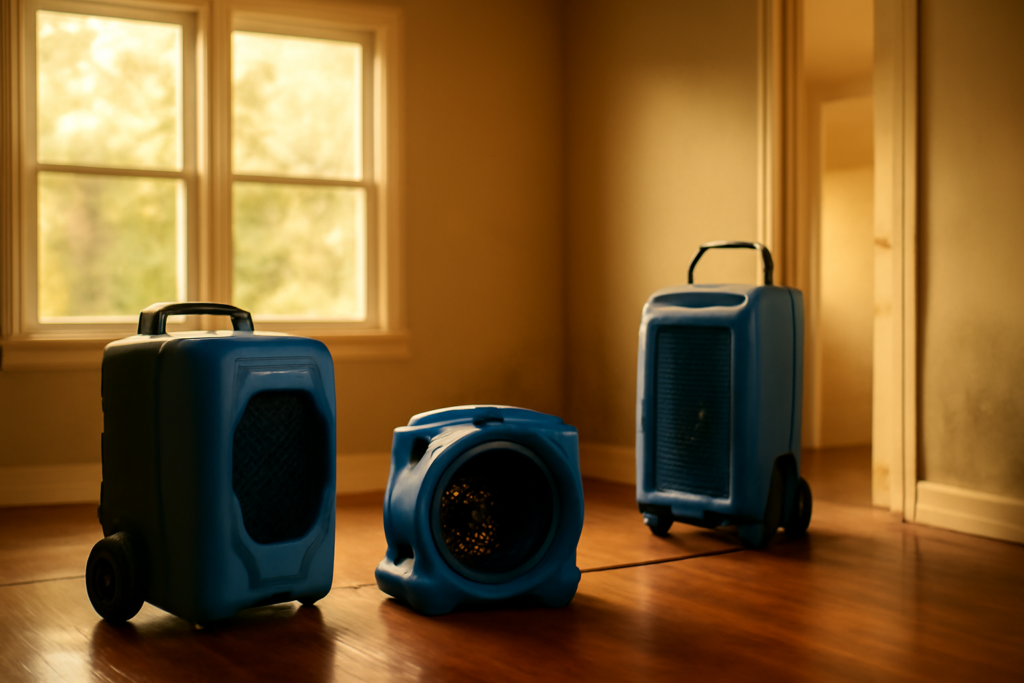
- Our specialized dehumidifiers and air movers create a controlled environment to accelerate the drying process, preventing long-term damage and mold.
- We provide detailed drying logs and reports so you can see the progress and understand exactly what’s being done to restore your home.
How Structural Drying & Dehumidification Actually Works
Getting moisture out of your home’s structure isn’t as simple as mopping up a spill. It involves a scientific process that requires specialized knowledge and equipment. When water infiltrates walls, floors, or ceilings, it doesn’t just evaporate on its own; it needs to be actively extracted and the environment controlled. Cutting corners here can lead to serious, long-lasting issues like weakened building materials and unhealthy air quality. Our crews follow strict protocols to ensure a complete and safe drying process.
Step 1: Initial Assessment and Containment
First, we arrive and conduct a thorough inspection using advanced tools to identify all affected areas. This includes using moisture meters and infrared cameras. Then, we’ll set up containment barriers, often using plastic sheeting, to isolate the wet areas. This prevents moisture from spreading to unaffected parts of your home during the drying process. This step is crucial for efficient water removal.
Step 2: Water Extraction
If there’s standing water, we use powerful extraction equipment, like truck-mounted vacuums or specialized pumps, to remove as much bulk water as possible. This is the first line of defense against water damage. Getting this water out quickly is key to minimizing the spread and the potential for secondary damage. We work diligently to extract every possible drop.
Step 3: Controlled Air Movement
Next, we strategically place high-speed air movers (fans) throughout the affected areas. These machines create airflow across surfaces, which helps to speed up evaporation. The moving air lifts moisture from materials like wood, drywall, and carpet padding. This controlled airflow is essential for optimizing the drying conditions.
Step 4: Dehumidification
While air movers speed up evaporation, industrial-grade dehumidifiers are used to remove the moisture from the air. These units pull water vapor out of the atmosphere, significantly lowering the humidity levels. This process is critical for preventing secondary damage and creating an environment where materials can dry thoroughly. It’s a balancing act we manage precisely.
Step 5: Monitoring and Verification
Throughout the entire drying process, our technicians continuously monitor moisture levels using specialized equipment. We take readings of materials and the ambient air to track progress. We won’t consider the job done until your property has reached safe, dry standards. This meticulous monitoring ensures we’ve successfully completed the structural drying and dehumidification.
Don’t wait for water damage to become a bigger problem. Call us now to get a fast, professional assessment and start the drying process immediately. Your home’s health depends on it.

Warning Signs You Need Structural Drying & Dehumidification
Catching the early indicators of moisture intrusion is vital. These signs often appear subtle but can point to significant damage developing within your home’s structure. Recognizing them quickly means you can address the issue before it leads to costly repairs, mold, or structural compromise. Pay close attention to what your home is telling you; it could save you a lot of trouble.
Musty Odors That Won’t Go Away
If you notice a persistent damp, earthy, or musty smell, especially in specific rooms or areas, it’s a strong indicator of hidden moisture and potential mold growth. This smell is often the first sign of trouble. Don’t just mask it with air fresheners; investigate the source.
Discoloration or Stains on Walls or Ceilings
Any new brown, yellow, or dark spots appearing on your paint or wallpaper, particularly near pipes, windows, or under bathrooms, signal that water is penetrating the materials. These stains are a visual cue of water intrusion. They mean moisture is actively soaking into your drywall or plaster.
Peeling or Bubbling Paint and Wallpaper
When paint starts to blister or peel away from the surface, or wallpaper begins to lift and bubble, it’s often because moisture is trapped behind it. This indicates that the adhesion is compromised by dampness. It’s a clear sign that the material is saturated from behind.
Warped or Sagging Drywall
If sections of your drywall appear to be bowing, sagging, or feel soft to the touch, the material has likely absorbed a significant amount of water. This is a serious sign that the structural integrity is compromised. It requires immediate attention before it deteriorates further.
Soft or Spongy Flooring
Carpet that feels unusually soft, or hard flooring that feels spongy or gives way underfoot, suggests water has saturated the subfloor or padding beneath. This indicates that the moisture has penetrated deep. You might also notice a distinct smell.
Increased Humidity Levels
If your home generally feels more humid than usual, or if condensation is forming on windows and pipes, it could be a sign of a larger moisture problem. This indicates poor air quality and excess moisture. It’s a subtle clue that something is off.
Structural Drying & Dehumidification vs. DIY: When To Call a Professional
| Situation | DIY? | Call a Pro? | Why |
|---|---|---|---|
| Small, fresh spill on hard flooring | Yes | No | Easy to wipe up and dry with towels. |
| Minor condensation on a window | Yes | No | Usually a ventilation issue that can be managed with airflow. |
| Water stain from a minor roof leak, smaller than a dinner plate | Maybe | Yes | Can be tricky to dry out wall cavities completely. |
| Persistent musty odor in a room | No | Yes | Likely indicates hidden mold or trapped moisture in structure. |
| Water damage spreading behind walls or under floors | No | Yes | Requires specialized equipment to access and dry hidden areas. |
| Widespread dampness after a burst pipe or significant leak | No | Yes | Needs industrial equipment and expertise to dry safely and effectively. |
For anything beyond a minor surface spill, calling a professional is almost always the best course of action. Our team has the specialized tools and training to handle complex water intrusion scenarios. We can ensure your home is dried thoroughly and safely, preventing future problems.
Structural Drying & Dehumidification Cost In Iowa Colony, TX
The cost for structural drying and dehumidification in Iowa Colony, TX, can vary significantly. Factors like the size of the affected area, the extent of water saturation, and the type of building materials involved all play a role. These estimates provide a general idea, but an on-site assessment is necessary for an accurate quote.
| Service Aspect | Typical Price Range | What Affects Cost |
|---|---|---|
| Initial Inspection & Moisture Assessment | $300 – $800 | Complexity of the damage and required equipment. |
| Water Extraction (per room) | $400 – $1,200 | Amount of standing water and room size. |
| Air Mover & Dehumidifier Rental (per day) | $100 – $300 | Number of units needed and duration of drying. |
| Containment Setup & Material Removal | $500 – $1,500 | Severity of saturation and need for protective barriers. |
| Full Structural Drying Project (small home) | $2,000 – $6,000 | Overall scope, duration, and complexity of the job. |
| Full Structural Drying Project (larger home) | $5,000 – $15,000+ | Extensive water damage, multiple levels, or difficult access. |
These figures are estimates for structural drying and dehumidification only. A free, no-obligation estimate will be provided after our technicians assess your specific situation. We aim to be transparent about costs from the start.
Service Areas Near Iowa Colony, TX
Alvin, Angleton, Arcola, Bellaire, Brazoria, Brookside Village, Clute, Corpus Christi, Deer Park, Dickinson, Fresno, Friendswood, Galena Park, Galveston, Houston, Humble, Jacinto City, Katy, Kemah, La Marque, La Porte, League City, Manvel, Missouri City, Mont Belvieu, Nassau Bay, Pearland, Pasadena, Port Arthur, Port Bolivar, Port Lavaca, Richmond, Rosenberg, Santa Fe, Seabrook, South Houston, Sugar Land, Texas City, Webster, West Columbia,.
Common Questions About Structural Drying & Dehumidification
What if I can’t see any visible water damage, but I smell a musty odor?
A persistent musty odor is often the first indicator that moisture is trapped within your home’s structure, behind walls, or under floors. This is exactly the kind of situation where professional structural drying is essential. Our team uses specialized equipment like moisture meters and thermal imaging cameras to locate the hidden moisture source. We’ll then implement a targeted drying plan to remove the dampness and prevent mold growth.
How long does the structural drying process typically take?
The drying timeline can vary significantly, usually ranging from three days to two weeks, sometimes longer. It depends on factors like the amount of water, the type of materials affected (e.g., hardwood vs. drywall), and ambient humidity. We continuously monitor the drying process to ensure it’s progressing efficiently and will provide you with an estimated completion time after our initial assessment.
Will insurance cover structural drying and dehumidification costs?
In many cases, yes. If the water damage is due to a sudden and accidental event like a burst pipe or storm damage, your homeowner’s insurance policy often covers the costs associated with structural drying and dehumidification. We have extensive experience working with insurance adjusters and can help document the damage and the drying process for your claim. We’ll work to make the claims process as smooth as possible for you.
What health risks are associated with not properly drying water-damaged structures?
The primary health risk is mold growth, which can thrive in damp environments within 24-48 hours. Mold spores can cause respiratory issues, allergic reactions, and exacerbate conditions like asthma. Beyond mold, stagnant water can also attract pests. Proper, rapid structural drying is crucial for preventing these health hazards and ensuring a safe living environment.
Can I just use my home’s HVAC system to dry out my house?
Your home’s HVAC system is designed for comfort, not for large-scale water damage restoration. It simply doesn’t have the capacity to remove the amount of moisture required after a significant leak or flood. Our industrial-grade dehumidifiers and high-velocity air movers are specifically designed for aggressive moisture removal. Using them ensures your property is dried effectively and efficiently, preventing long-term damage.
Check Our Other Relevant Services

Gary Gwin: Damage Restoration Expert
With over 20 years of hands-on experience, Gary Gwin is a trusted authority in property recovery and disaster mitigation. As a licensed specialist, Gary has dedicated his career to restoring safety and peace of mind for homeowners facing environmental crises.
𝗖𝗲𝗿𝘁𝗶𝗳𝗶𝗰𝗮𝘁𝗶𝗼𝗻𝘀: Gary holds multiple advanced IICRC certifications, including Water Damage Restoration (WRT), Applied Microbial Remediation (Mold), Applied Structural Drying (ASD), Odor Control, and Fire and Smoke Restoration. His deep technical knowledge ensures every project meets the highest industry standards for health and safety.
𝗕𝗲𝘀𝘁 𝗣𝗮𝗿𝘁 𝗼𝗳 𝘁𝗵𝗲 𝗝𝗼𝗯: Gary finds the most fulfillment in guiding families through the recovery process, transforming a chaotic property loss into a restored, habitable home.
𝗙𝗮𝘃𝗼𝗿𝗶𝘁𝗲 𝗣𝗮𝘀𝘁𝗶𝗺𝗲: When off the clock, Gary enjoys exploring local hiking trails and woodworking.