Trusted by 150+ Homeowners
Structural Drying & Dehumidification in Pasadena, TX
- Over 152 5-Star Reviews
- Free Estimates and Quotes
- 100% Satisfaction Guaranteed
- Child, Family & Pet Safe Steps
- 24-Hour Emergency Service
- Fully Licensed & Insured
Don’t Let Hidden Moisture Ruin Your Pasadena, TX Home
You just noticed it. A faint, damp spot on the ceiling after a storm, or maybe a strange smell in the laundry room that just won’t go away. You press on the wall, and it feels soft, yielding. This isn’t just a small leak; it’s water seeping deep into your home’s structure, creating a breeding ground for mold and rot. Ignoring it means inviting long-term structural damage and potential health hazards. You need to address this hidden moisture now before it causes irreversible harm to your property.
Homeowners around here trust our team because we tackle these specific issues with precision. We’ve helped hundreds of families in your neighborhood avoid the worst outcomes from water intrusion. Our proven drying methods and commitment to getting it right have earned us over 165 five-star reviews. When your home is at risk from lingering dampness, you want a team that understands the science of drying, not just surface cleanup.
- We employ advanced moisture meters and thermal imaging to pinpoint exactly where water is hiding, ensuring no corner of your structure is left untreated.
- Our targeted dehumidification process rapidly removes excess humidity from the air and materials, preventing secondary damage like mold growth and warping.
- We establish containment zones to prevent moisture and potential contaminants from spreading to unaffected areas of your home during the drying phase.
How Structural Drying & Dehumidification Actually Works
Getting structural drying right is a science. It’s not about just mopping up standing water. It’s about understanding how water moves through building materials – drywall, wood, insulation – and then using specialized equipment to pull that moisture out. When you cut corners here, you’re essentially leaving a ticking time bomb of mold and decay inside your walls. Our crews follow strict protocols, using calibrated equipment to achieve specific drying goals, measured meticulously.
Initial Assessment and Moisture Mapping
Our technicians start by thoroughly inspecting the affected areas. We use sophisticated tools like moisture meters and infrared cameras to create a detailed map of all wet materials. This initial step is crucial for effective drying and helps us understand the full scope of the water intrusion, often revealing hidden moisture you can’t see.
Setting Up Containment
To ensure the drying process is efficient and doesn’t spread moisture to other parts of your home, we set up containment barriers. This might involve using plastic sheeting and negative air pressure systems. This controlled environment allows us to focus drying efforts precisely where they’re needed, preventing cross-contamination.
Advanced Air Movement
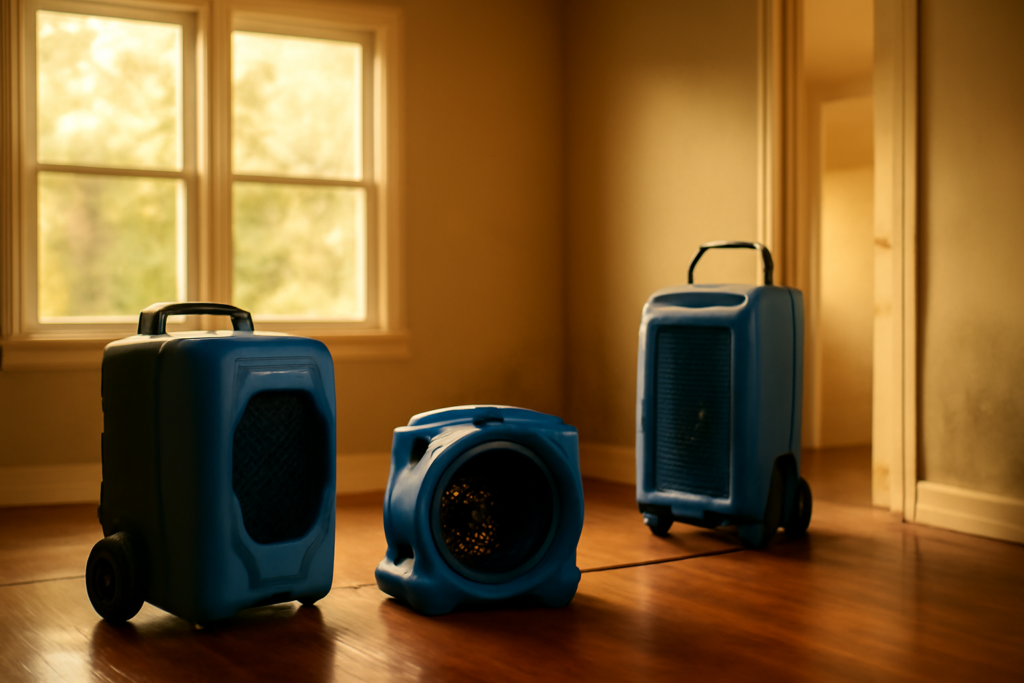
We strategically place industrial-grade air movers to circulate air throughout the affected structure. This constant airflow helps to break the bond between water and materials, speeding up evaporation. Proper air movement is key to efficient drying and prevents stagnant, humid pockets from forming.
Targeted Dehumidification
Alongside air movers, we deploy powerful dehumidifiers designed to extract large amounts of moisture from the air. These machines lower the humidity levels in the contained area, allowing wet materials to dry more quickly. We monitor their performance closely to ensure they’re working optimally to remove excess moisture.
Continuous Monitoring and Drying Protocols
Throughout the entire process, we continuously monitor moisture levels in the air and materials. We use drying logs and specific protocols to track progress. Our goal is to bring your structure back to its normal moisture content, which usually takes several days to a week, depending on the severity.
Don’t wait for dampness to turn into serious damage. Call us today for an immediate assessment and begin the specialized drying process. Your home’s integrity is worth acting fast.

Warning Signs You Need Structural Drying & Dehumidification
Catching the signs of hidden moisture early can save you a lot of headaches and expense. Lingering dampness doesn’t just feel unpleasant; it’s a serious threat to your home’s structure and your family’s health. Recognizing these indicators means you can get the right help before minor issues become major problems.
Musty Odors That Won’t Go Away
That persistent, earthy smell, especially after rain or a plumbing issue, is often your first clue. It’s the scent of mold and mildew beginning to grow in damp, hidden spaces. This odor indicates unseen moisture is present and needs professional attention.
Soft or Spongy Walls and Ceilings
If you notice areas of your drywall feeling unusually soft, yielding, or even bubbling, it’s a clear sign of water saturation. This indicates the material has absorbed significant moisture, weakening its structure. Structural integrity is compromised when materials become this saturated.
Warping or Stained Drywall and Wood
Look for visible signs like buckling drywall, peeling paint, or darkened, warped wood trim. These are physical indicators that moisture has been present long enough to cause materials to deform or discolor. Such changes signal significant water intrusion has occurred.
Visible Mold Growth
Any sign of mold, even small patches, on walls, ceilings, or around windows, means there’s a moisture source feeding it. Mold can spread rapidly in damp environments and poses serious health risks. It’s a definitive sign that structural drying is necessary.
Increased Humidity Levels Indoors
If your home feels unusually clammy or sticky, even when your air conditioner is running, it could be a sign of excessive humidity. This often points to a hidden leak or poor ventilation allowing moisture to build up. Elevated humidity can lead to widespread damage.
Peeling or Bubbling Wallpaper
Wallpaper that starts to lift or bubble away from the wall, particularly near the floor or ceiling, often indicates moisture behind the paper. The adhesive fails when it’s repeatedly exposed to dampness, signaling a problem needing immediate attention.
Structural Drying & Dehumidification vs. DIY: When To Call a Professional
| Situation | DIY? | Call a Pro? | Why |
|---|---|---|---|
| Small, surface-level spill on hard flooring | Yes | No | Easy to clean up and dry with fans and towels. |
| Water stain on a ceiling tile in a finished basement | No | Yes | Ceiling tiles can hide significant water damage and mold growth. |
| Dampness behind baseboards after a minor pipe leak | Maybe | Yes | Hidden moisture can spread quickly and cause unseen damage. |
| Whole rooms flooded from a burst pipe | No | Yes | Requires specialized equipment for rapid, thorough drying. |
| Musty smell in walls or floors, no visible leak | No | Yes | Indicates hidden moisture, mold, or structural issues. |
| Condensation on windows | Yes | No | Usually a ventilation issue, manageable with better airflow. |
While minor spills are manageable, anything that penetrates your home’s structure or affects large areas requires professional intervention. Our specialized equipment and trained technicians are essential for preventing long-term damage and ensuring a healthy environment.
Structural Drying & Dehumidification Cost In Pasadena, TX
The cost for structural drying and dehumidification in Pasadena, TX, can vary significantly. Factors like the size of the affected area, the type of materials involved, and the duration of moisture exposure all play a role. These are general estimates and a detailed on-site assessment is always needed for an accurate quote.
| Service | Typical Price Range | What Affects Cost |
|---|---|---|
| Initial Moisture Assessment & Mapping | $300 – $800 | Complexity of the area and use of advanced imaging technology. |
| Containment Setup & Air Scrubbing | $500 – $1,500 | Size of the contained area and number of air scrubbers needed. |
| Industrial Air Mover Rental (per unit) | $100 – $300 per day | Number of units required and length of time needed for effective drying. |
| High-Capacity Dehumidifier Rental (per unit) | $150 – $400 per day | Type of dehumidifier and the amount of moisture it needs to extract. |
| Structural Drying Project (multi-day) | $1,000 – $7,000+ | Extent of water damage, drying time required, and materials affected. |
| Mold Remediation (if mold is found) | $750 – $5,000+ | Severity and spread of mold contamination. |
We offer free estimates to give you a clear understanding of costs specific to your situation. Contact us today to schedule your assessment and get a precise pricing breakdown.
Service Areas Near Pasadena, TX
La Porte, Deer Park, Channelview, Galena Park, Jacinto City, Baytown, South Houston, Webster, Pearland, Friendswood, League City, Kemah, Seabrook, Shoreacres, Highlands, Crosby, Huffman, Mont Belvieu, Anahuac, Dayton.
Common Questions About Structural Drying & Dehumidification
How long does structural drying typically take?
The timeline for structural drying depends heavily on the extent of water damage and the materials affected. A minor issue might resolve in 2-3 days, while severe saturation could take a week or longer. We use specialized equipment and follow strict protocols to dry your property as efficiently as possible, constantly monitoring progress.
Will my insurance cover structural drying and dehumidification?
In many cases, yes. If the water intrusion was sudden and accidental, like from a burst pipe or storm damage, your homeowner’s insurance policy likely covers structural drying and dehumidification. We work closely with insurance adjusters to ensure proper documentation and billing, making the claims process smoother for you.
What are the health risks of not drying a structure properly?
Failing to dry a structure thoroughly creates an ideal environment for mold and mildew growth. Inhaling mold spores can trigger allergies, asthma attacks, and other respiratory problems. It can also lead to persistent musty odors and long-term damage to your home’s materials. Addressing moisture immediately is crucial for your family’s well-being.
What kind of equipment do you use for structural drying?
We utilize a range of industrial-grade equipment, including high-velocity air movers to increase evaporation, powerful dehumidifiers to remove moisture from the air, and sometimes specialized drying chambers for specific items. We also use advanced moisture meters and thermal imaging cameras to precisely measure and track drying progress, ensuring a complete and thorough job.
Can I prevent structural damage from water in the future?
Regular maintenance is key. This includes checking for roof leaks, ensuring proper grading around your foundation to direct water away, maintaining your plumbing, and promptly addressing any small leaks you discover. For areas prone to flooding, consider installing sump pumps or elevating critical systems. Early detection and proactive care are your best defenses against future water damage.
Check Our Other Relevant Services

Gary Gwin: Damage Restoration Expert
With over 20 years of hands-on experience, Gary Gwin is a trusted authority in property recovery and disaster mitigation. As a licensed specialist, Gary has dedicated his career to restoring safety and peace of mind for homeowners facing environmental crises.
𝗖𝗲𝗿𝘁𝗶𝗳𝗶𝗰𝗮𝘁𝗶𝗼𝗻𝘀: Gary holds multiple advanced IICRC certifications, including Water Damage Restoration (WRT), Applied Microbial Remediation (Mold), Applied Structural Drying (ASD), Odor Control, and Fire and Smoke Restoration. His deep technical knowledge ensures every project meets the highest industry standards for health and safety.
𝗕𝗲𝘀𝘁 𝗣𝗮𝗿𝘁 𝗼𝗳 𝘁𝗵𝗲 𝗝𝗼𝗯: Gary finds the most fulfillment in guiding families through the recovery process, transforming a chaotic property loss into a restored, habitable home.
𝗙𝗮𝘃𝗼𝗿𝗶𝘁𝗲 𝗣𝗮𝘀𝘁𝗶𝗺𝗲: When off the clock, Gary enjoys exploring local hiking trails and woodworking.