Trusted by 150+ Homeowners
Water-Damaged Flooring Removal in Highlands, TX
- Over 152 5-Star Reviews
- Free Estimates and Quotes
- 100% Satisfaction Guaranteed
- Child, Family & Pet Safe Steps
- 24-Hour Emergency Service
- Fully Licensed & Insured
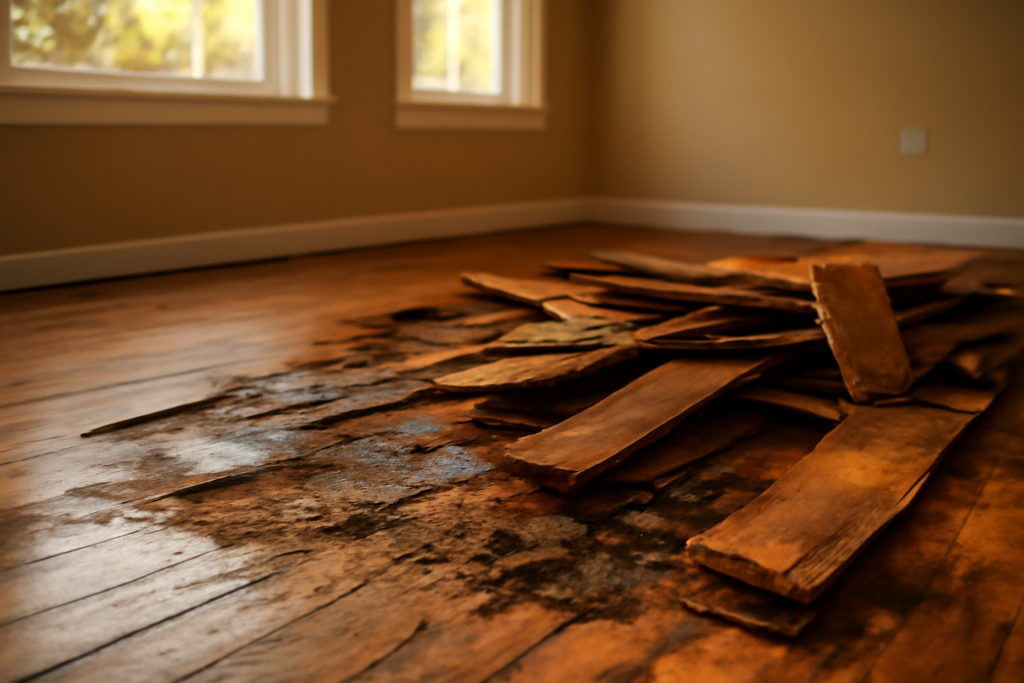
Tired of Soggy Floors? We Handle Water-Damaged Flooring Removal in Highlands, TX
When that heavy Texas humidity lingers or a summer storm rolls in with more than just a sprinkle, your floors can take a real beating. We often see the aftermath right here in Highlands, TX, where even a small plumbing leak can turn a beautiful floor into a soggy mess. Dealing with waterlogged floors isn’t just an eyesore; it’s a serious problem that needs prompt attention. You’re probably wondering what to do next, and we’re here to tell you it’s time to act. Ignoring water damage is the fastest way to turn a manageable issue into a costly disaster.
It’s no wonder so many homeowners in your neighborhood trust our team for their Water-Damaged Flooring Removal needs. We’ve earned over 165 five-star reviews by treating each property with care and delivering results that last. We understand the stress you’re under, and we aim to make this part of the recovery as smooth as possible. When you need reliable help to get your floors back in shape, choosing experienced professionals makes all the difference.
- We specialize in quickly identifying and safely removing water-damaged materials before they cause further structural issues.
- Our targeted approach prevents the spread of mold and mildew, protecting your family’s health and your home’s integrity.
- We use the right equipment to ensure all affected flooring and subflooring are properly addressed, setting the stage for a successful rebuild.
How We Tackle Water-Damaged Flooring Removal
When water finds its way into your home, it doesn’t just sit on the surface. It seeps into carpets, padding, and even the subfloor beneath, creating a breeding ground for mold and rot. That’s why a proper removal process is so critical. Cutting corners here means you’ll likely face bigger problems down the road, like persistent odors or structural damage. Our systematic approach ensures we address the problem thoroughly, from the visible damage to the hidden moisture. We’ve seen what happens when things go wrong, and we’re committed to doing it right the first time for you.
Step 1: Thorough Water Assessment
Our technicians begin by carefully assessing the extent of the water damage. We use specialized moisture meters to detect hidden moisture in your flooring and subflooring. Pinpointing the wet areas accurately is crucial for efficient removal. This step typically takes a couple of hours, depending on the size of the affected space.
Step 2: Containment of the Damaged Area
Before we start removing anything, we’ll set up containment barriers. This prevents any lingering moisture or debris from spreading to unaffected parts of your home. Protecting your healthy spaces is a top priority. This usually takes about an hour to set up.
Step 3: Removal of Damaged Flooring
This is where the bulk of the work happens. We carefully remove saturated carpets, padding, vinyl, tile, or wood flooring. Our crews are trained to handle different flooring types safely and efficiently. Proper disposal of contaminated materials is part of this process. Depending on the square footage, this can take anywhere from half a day to several days.
Step 4: Subfloor Inspection and Drying
Once the flooring is out, we inspect the subfloor for any signs of damage or remaining moisture. If needed, we’ll bring in industrial-grade drying equipment to ensure the subfloor is completely dry. Preventing subfloor rot is key to a lasting repair. This drying phase can take several days, monitored closely by our team.
Step 5: Deodorizing and Preparing for Repair
After everything is dry and clean, we’ll treat the area to neutralize any odors and prepare it for new flooring installation. Ensuring a fresh start for your home is our goal. This final step is usually completed within a day.
Don’t let water-damaged floors linger in your home. Contact us today for a prompt and thorough removal service. We’re ready to help you reclaim your space.
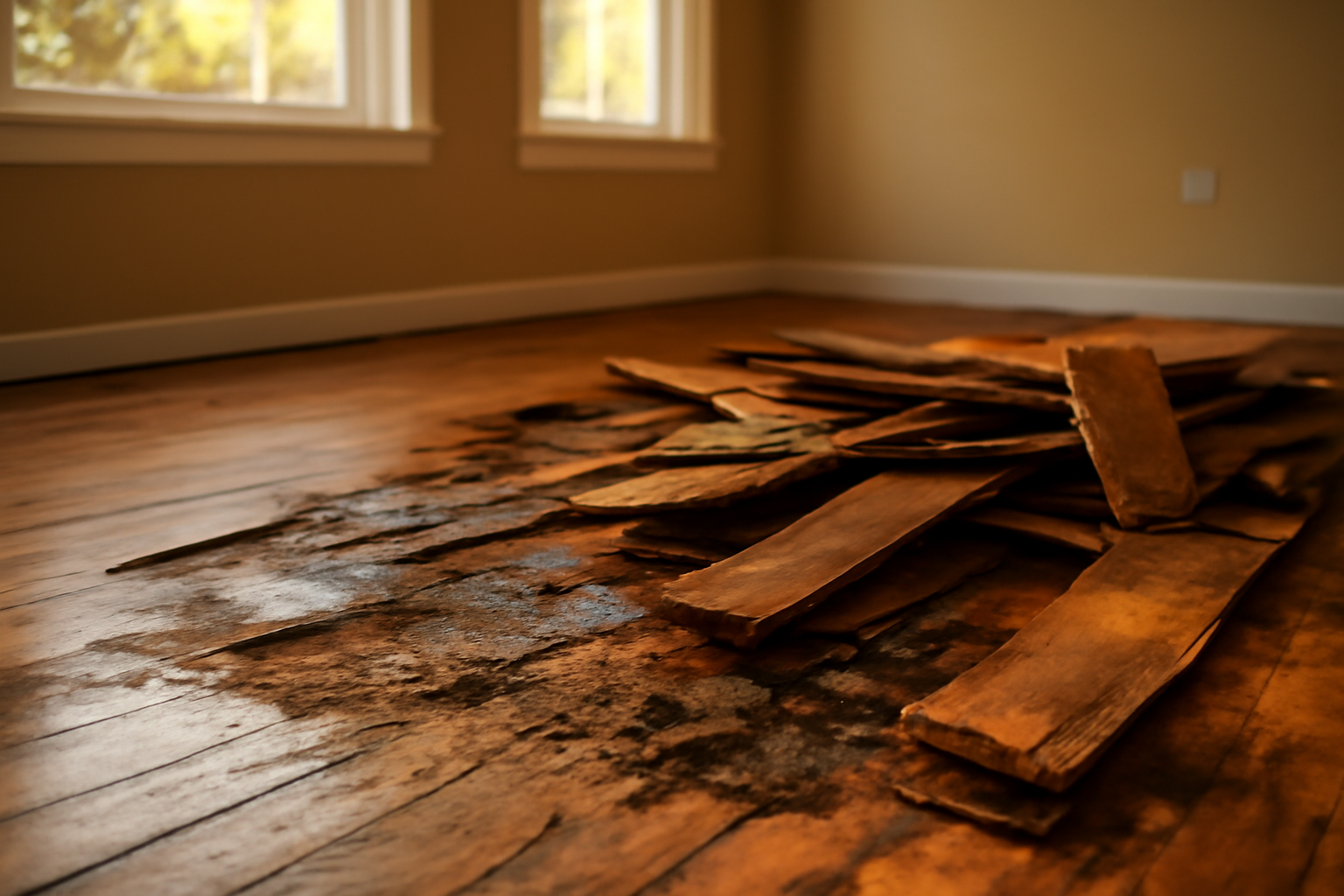
Warning Signs You Need Water-Damaged Flooring Removal
Catching water issues early can save you a lot of money and headaches. Sometimes, the signs aren’t obvious, but paying attention to subtle changes can make a big difference. Early detection is key to preventing more significant damage. Don’t brush off these indicators; they’re your home’s way of telling you something’s wrong.
Musty Odors That Won’t Go Away
A persistent damp, musty smell, especially in certain rooms or areas, often indicates hidden moisture. Mold and mildew thrive in damp environments and release those unpleasant odors.
Visible Water Stains or Discoloration
Look for dark spots, rings, or discoloration on your carpets, wood, or tile. These are clear indicators that water has soaked into the material. Water stains are a visual warning you shouldn’t ignore.
Warped or Buckled Flooring
Wood and laminate floors can warp, swell, or buckle when exposed to excess moisture. This is a sign of significant water saturation. Damaged flooring needs removal to prevent further structural issues.
Soft or Spongy Spots in Carpet
If parts of your carpet feel soft, squishy, or unusually damp underfoot, it means the padding and possibly the subfloor are saturated. Test suspicious areas by walking on them.
Peeling or Bubbling Vinyl or Linoleum
Water trapped beneath vinyl or linoleum can cause it to peel away from the subfloor or create bubbles. Check for lifting edges and signs of moisture underneath.
Loose Tiles or Grout Issues
Excess moisture can break down the adhesive holding tiles in place, leading to loose tiles. It can also damage grout, making it crumble. Water behind tiles is a serious problem.
Water-Damaged Flooring Removal vs. DIY: When To Call a Professional
| Situation | DIY? | Call a Pro? | Why |
|---|---|---|---|
| Minor spill on tile | Yes | No | Easy to wipe up, minimal risk of subfloor damage. |
| Slightly damp carpet from a small leak | Maybe | Yes | Hidden moisture can still cause mold; professional drying is best. |
| Warped wood or buckled laminate | No | Yes | Requires specialized tools and knowledge to remove without damaging subfloor. |
| Large area of saturated carpet and padding | No | Yes | Too much material for DIY removal; risk of mold and structural damage is high. |
| Water damage after a flood or burst pipe | No | Yes | Extensive saturation requires professional assessment, containment, and removal. |
| Suspected mold growth on flooring | No | Yes | Mold remediation requires safety protocols and specialized equipment. |
For anything beyond a simple, contained spill, calling a professional for Water-Damaged Flooring Removal is almost always the wisest choice. DIY attempts on significant damage often lead to incomplete drying and unseen mold growth. Our team has the equipment and expertise to handle it safely and effectively.
Water-Damaged Flooring Removal Cost In Highlands, TX
The cost for Water-Damaged Flooring Removal can vary quite a bit depending on the scope of the problem. Factors like the type of flooring, how much area is affected, and how deep the moisture has penetrated all play a role in the final price here in Highlands, TX. Understanding these variables helps you budget for the necessary repairs. These are general estimates and not a guarantee of your specific cost.
| Service | Typical Price Range | What Affects Cost |
|---|---|---|
| Minor Carpet Removal (up to 200 sq ft) | $500 – $1,200 | Square footage and thickness of carpet/padding. |
| Wood/Laminate Flooring Removal (up to 200 sq ft) | $700 – $1,800 | Type of wood, installation method (glued vs. floating). |
| Tile Flooring Removal (up to 200 sq ft) | $900 – $2,500 | Type of tile, adhesive used, and subfloor condition. |
| Subfloor Drying (per day, with equipment) | $200 – $500 | Size of area, humidity levels, and required drying time. |
| Odor Treatment and Sanitization | $300 – $800 | Severity of odor and type of treatment needed. |
| Full Room Water-Damaged Flooring Removal (average size) | $1,500 – $5,000+ | Combination of flooring type, area size, and subfloor damage. |
The best way to get an accurate estimate for your Water-Damaged Flooring Removal is to have our team come out and assess the situation. We offer free, no-obligation estimates so you know exactly what to expect.
Service Areas Near Highlands, TX
Baytown, Sheldon, Crosby, Huffman, Mont Belvieu, Channelview, Jacinto City, Galena Park, La Porte, Pasadena, Deer Park, Pearland, Friendswood, Webster, League City, Kemah, Seabrook, Texas City, Dickinson, Alvin.
Common Questions About Water-Damaged Flooring Removal
What’s the average timeline for removing water-damaged flooring?
The timeline can vary significantly. For a small area, it might take a day or two for removal and initial drying. Larger jobs or those with deep saturation could take up to a week or more, especially if subfloor drying is extensive. We work efficiently to get your home back to normal as quickly as possible.
How much does water-damaged flooring removal typically cost?
As you saw in our pricing table, costs can range from a few hundred to several thousand dollars. It really depends on the size of the affected area, the type of flooring, and the extent of the water damage. Getting a professional assessment is the best way to understand your specific costs.
Will my homeowner’s insurance cover water-damaged flooring removal?
Often, yes, especially if the water damage was caused by a sudden event like a burst pipe or storm. Damage from slow leaks or poor maintenance might not be covered. We recommend checking your policy details and can help document the damage for your claim.
What are the health risks of leaving water-damaged flooring in place?
The biggest health risk is mold and mildew growth. These can cause respiratory problems, allergic reactions, and other health issues. Untreated mold can spread throughout your home. Prompt removal and drying are essential for a healthy living environment.
Can I prevent water damage to my floors in the future?
Yes, there are several preventative measures you can take. Regularly inspect plumbing for leaks, ensure your roof and gutters are in good repair, and consider sump pumps if you’re in a flood-prone area. Maintaining your home’s defenses can prevent many water issues.
Check Our Other Relevant Services

Gary Gwin: Damage Restoration Expert
With over 20 years of hands-on experience, Gary Gwin is a trusted authority in property recovery and disaster mitigation. As a licensed specialist, Gary has dedicated his career to restoring safety and peace of mind for homeowners facing environmental crises.
𝗖𝗲𝗿𝘁𝗶𝗳𝗶𝗰𝗮𝘁𝗶𝗼𝗻𝘀: Gary holds multiple advanced IICRC certifications, including Water Damage Restoration (WRT), Applied Microbial Remediation (Mold), Applied Structural Drying (ASD), Odor Control, and Fire and Smoke Restoration. His deep technical knowledge ensures every project meets the highest industry standards for health and safety.
𝗕𝗲𝘀𝘁 𝗣𝗮𝗿𝘁 𝗼𝗳 𝘁𝗵𝗲 𝗝𝗼𝗯: Gary finds the most fulfillment in guiding families through the recovery process, transforming a chaotic property loss into a restored, habitable home.
𝗙𝗮𝘃𝗼𝗿𝗶𝘁𝗲 𝗣𝗮𝘀𝘁𝗶𝗺𝗲: When off the clock, Gary enjoys exploring local hiking trails and woodworking.