Trusted by 150+ Homeowners
Structural Drying & Dehumidification in Aldine, TX
- Over 152 5-Star Reviews
- Free Estimates and Quotes
- 100% Satisfaction Guaranteed
- Child, Family & Pet Safe Steps
- 24-Hour Emergency Service
- Fully Licensed & Insured
Expert Structural Drying & Dehumidification Services in Aldine, TX
If you’ve recently experienced a water leak, flood, or even just high humidity, you might not realize how quickly moisture can get trapped deep within your walls, floors, and ceilings. Ignoring hidden moisture is a common mistake people make, and it can lead to serious issues down the road. It’s crucial to address water damage promptly, especially here in Aldine, TX, where humidity can be a persistent challenge. Acting fast prevents further damage and costly repairs.
Homeowners around here trust our team because we understand the urgency of water-related problems. With over 165 five-star reviews from satisfied neighbors, you can see why we’re the go-to for structural drying needs. We focus on getting your property back to a safe, dry state with minimal disruption. Your comfort and safety are our top priorities.
- Rapidly extract standing water and control moisture to prevent secondary damage like mold growth.
- Utilize specialized equipment to dry out structural materials, not just surfaces, ensuring a complete restoration.
- Help preserve the integrity of your home’s structure and materials, avoiding costly replacements.
How Structural Drying & Dehumidification Actually Works
Our approach to structural drying isn’t just about blowing air around; it’s a carefully controlled process designed to remove moisture from materials where it’s hidden. When water infiltrates your home’s structure, it can take weeks or even months to dry out naturally, and that’s if it ever fully dries. Improper drying leads to problems, so we employ proven methods and advanced equipment to accelerate the process safely and effectively. Speed is absolutely critical in these situations.
Initial Water Extraction
First, we tackle any standing water using powerful truck-mounted or portable extraction units. This removes bulk water efficiently, which is the first step in preventing further saturation. We aim to extract as much water as possible within the first 24 hours to minimize damage.
Setting Up Drying Equipment
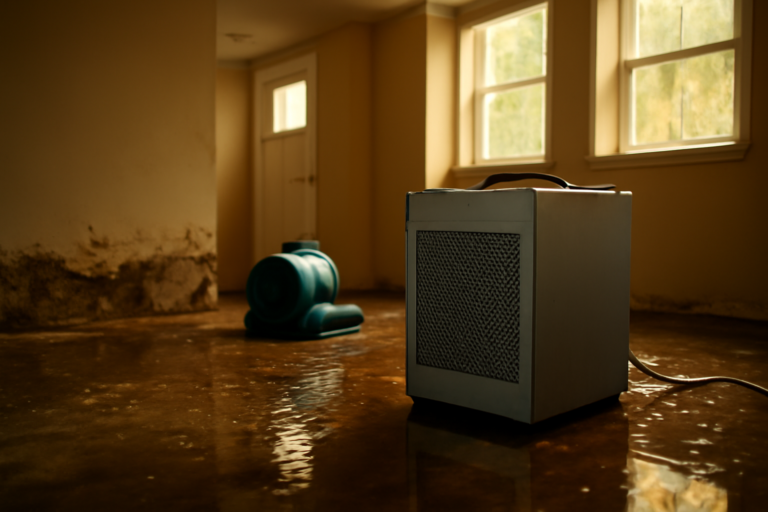
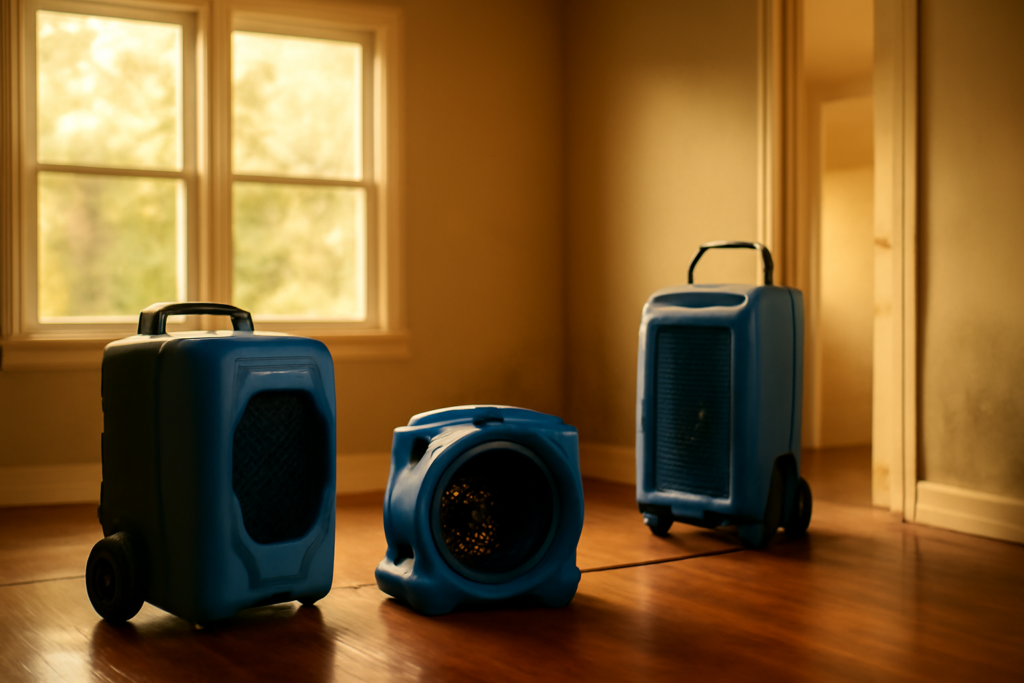
Once the bulk water is gone, we strategically place specialized drying equipment like air movers and dehumidifiers. Air movers create airflow across wet surfaces and materials, helping to speed up evaporation. Dehumidifiers pull moisture from the air, which is essential for drying out the structure itself. This phase can take several days, depending on the extent of the water intrusion.
Monitoring Moisture Levels
Throughout the drying process, our technicians use advanced moisture meters and thermal imaging cameras to track the progress. We continuously monitor the moisture content in walls, floors, and other building materials. Accurate readings ensure thorough drying and help us determine when the job is complete. This meticulous monitoring prevents over-drying or under-drying.
Controlled Evaporation
We manage the environment inside your property to create the ideal conditions for evaporation. This involves controlling temperature and humidity levels, often using specialized LGR (Low Grain Refrigerant) dehumidifiers. These units are highly effective at removing moisture, even in cooler conditions, making them perfect for drying out your home. We aim for a controlled, efficient drying environment.
Final Inspection and Verification
Before we consider the job done, we conduct a thorough final inspection. We verify that all affected materials have reached acceptable drying standards. You’ll have the confidence that your property is safely dried and restored. Our goal is to return your home to pre-loss conditions.
Don’t let water damage linger. Contact us immediately if you suspect hidden moisture in your home. We’ll be there quickly to assess the situation and start the drying process. Getting professional help is the smartest move.

Warning Signs You Need Structural Drying & Dehumidification
Sometimes, water damage isn’t obvious. You might not see a flood, but persistent dampness can still wreak havoc. Recognizing these subtle signs early can save you from much larger problems and expenses. Early detection is key to minimizing structural compromise. Don’t wait for visible mold to appear.
Musty Odors That Won’t Go Away
A persistent damp or musty smell, especially in closets, basements, or bathrooms, is often the first sign of trapped moisture. Unpleasant odors indicate microbial growth, which thrives in damp environments. This smell often means moisture is hiding behind walls or under floors.
Discolored Walls or Ceilings
Look for new stains, water spots, or peeling paint on your walls and ceilings. These are clear indicators that water has penetrated the surface and is likely trapped within the structure. Visible discoloration needs immediate attention to prevent material breakdown.
Warped or Sagging Floors and Walls
If you notice that your floors are starting to buckle or your walls seem to be bowing or sagging, it could be due to moisture compromising the structural integrity. Material expansion and contraction due to moisture can cause significant warping. This is a serious sign of water intrusion.
Condensation on Windows or Pipes
While some condensation is normal, excessive moisture on windows, pipes, or ductwork can signal high humidity levels within your home. This suggests that the air isn’t circulating properly and moisture isn’t being removed. Excessive condensation is a red flag for potential hidden water issues.
Soft Spots in Walls or Floors
If you press on a wall or floor and it feels soft, spongy, or gives way slightly, it’s a strong indication of water saturation and potential decay of building materials. Soft materials suggest structural compromise that requires immediate assessment. This is not something to ignore.
Buckling or Loose Baseboards
Water damage can cause baseboards to warp, pull away from the wall, or appear loose. This often happens because the drywall and wood behind them have absorbed moisture. Damaged baseboards are a visual cue that moisture has reached an area it shouldn’t have.
Structural Drying & Dehumidification vs. DIY: When To Call a Professional
| Situation | DIY? | Call a Pro? | Why |
|---|---|---|---|
| Minor condensation on a single window pane | Yes | No | Usually a sign of normal humidity fluctuations. |
| Small, contained spill on a hard floor (e.g., tile) | Yes | No | Can typically be mopped up and air-dried with fans. |
| Visible mold growth (less than 1 sq ft) on a non-porous surface | No | Yes | Mold can spread quickly and pose health risks; professional assessment is needed. |
| Water leak from a pipe that has soaked into drywall and insulation | No | Yes | Moisture is likely trapped, requiring specialized drying equipment and expertise. |
| Basement flooding from heavy rain or sewer backup | No | Yes | Significant water requires professional extraction, drying, and potential sanitization. |
| Persistent musty odors after a known water event | No | Yes | Indicates hidden moisture and potential mold growth within the structure. |
While some minor moisture issues can be handled with basic cleanup, structural drying is complex. When water has penetrated building materials like wood framing, insulation, or subflooring, professional intervention is essential. Trusting the process to experts ensures your home is dried correctly and safely. We’ve seen the consequences of inadequate drying, and it’s never worth the risk.
Structural Drying & Dehumidification Cost In Aldine, TX
The cost for structural drying and dehumidification in Aldine, TX, can vary significantly. You might expect estimates ranging from $1,500 to $5,000 or more, depending on several factors. Key influences include the severity of water damage, the total square footage affected, the types of building materials involved, and the amount and type of specialized equipment needed. A thorough assessment is necessary for an accurate quote.
Service Areas Near Aldine, TX
Houston, Pasadena, Pearland, Sugar Land, The Woodlands, League City, La Porte, Friendswood, Missouri City, Katy, Cypress, Spring, Humble, Kingwood, Baytown, Deer Park, Channelview, Webster, Alvin, Manvel.
Common Questions About Structural Drying & Dehumidification
How long does structural drying take?
The timeline for structural drying can vary greatly, typically ranging from three days to two weeks, sometimes longer for severe cases. Factors like the extent of water damage, the materials affected, and ambient humidity play a significant role. We use advanced monitoring to ensure we don’t leave a moment sooner than necessary but also don’t prolong the process unnecessarily, aiming for efficient and complete drying.
Will my insurance cover structural drying?
In most cases, yes, especially if the water damage is from a sudden and accidental source like a burst pipe or storm. Homeowners insurance often covers the cost of professional structural drying and dehumidification. We work with insurance adjusters regularly and can help guide you through the claims process, providing detailed documentation of our work for your claim. Understanding your policy is key.
Is it safe to stay in my home during structural drying?
Generally, it is safe, but it depends on the extent of the damage and the equipment used. We prioritize your safety and will advise you if temporary relocation is recommended. Our team works diligently to create a safe and healthy environment, but some equipment can be noisy. We’ll discuss any potential concerns with you. Your well-being is paramount.
What kind of equipment do you use for structural drying?
We utilize a range of professional-grade equipment, including high-speed air movers for optimal airflow, powerful LGR (Low Grain Refrigerant) dehumidifiers to extract maximum moisture from the air and materials, and specialized drying mats or injectidry systems for drying behind walls and under floors. Advanced technology ensures thorough drying, reaching moisture you can’t see. We select the best tools for your specific situation.
Can I prevent structural drying needs in the future?
Preventing future needs involves regular home maintenance. This includes checking for roof leaks, maintaining plumbing and appliances, sealing foundation cracks, and ensuring proper drainage around your home. Proactive maintenance saves money and prevents water intrusion. If you do experience a leak, calling us immediately for structural drying can prevent long-term issues.
Check Our Other Relevant Services

Gary Gwin: Damage Restoration Expert
With over 20 years of hands-on experience, Gary Gwin is a trusted authority in property recovery and disaster mitigation. As a licensed specialist, Gary has dedicated his career to restoring safety and peace of mind for homeowners facing environmental crises.
𝗖𝗲𝗿𝘁𝗶𝗳𝗶𝗰𝗮𝘁𝗶𝗼𝗻𝘀: Gary holds multiple advanced IICRC certifications, including Water Damage Restoration (WRT), Applied Microbial Remediation (Mold), Applied Structural Drying (ASD), Odor Control, and Fire and Smoke Restoration. His deep technical knowledge ensures every project meets the highest industry standards for health and safety.
𝗕𝗲𝘀𝘁 𝗣𝗮𝗿𝘁 𝗼𝗳 𝘁𝗵𝗲 𝗝𝗼𝗯: Gary finds the most fulfillment in guiding families through the recovery process, transforming a chaotic property loss into a restored, habitable home.
𝗙𝗮𝘃𝗼𝗿𝗶𝘁𝗲 𝗣𝗮𝘀𝘁𝗶𝗺𝗲: When off the clock, Gary enjoys exploring local hiking trails and woodworking.