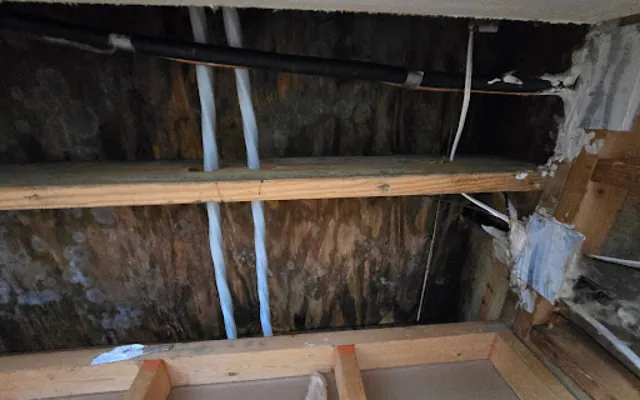
Houston attics run hot and humid for most of the year and take the brunt of wind-driven rain during Gulf Coast storms and hurricanes. Crews respond 24/7 to dry saturated insulation and framing before it spreads to the ceiling below.

A crew accesses the attic to identify the leak source, whether roof, HVAC line, or condensate, and confirms it has been addressed or contained.
Saturated insulation is identified and removed, since wet insulation loses R-value and can trap moisture against the roof deck and ceiling drywall.
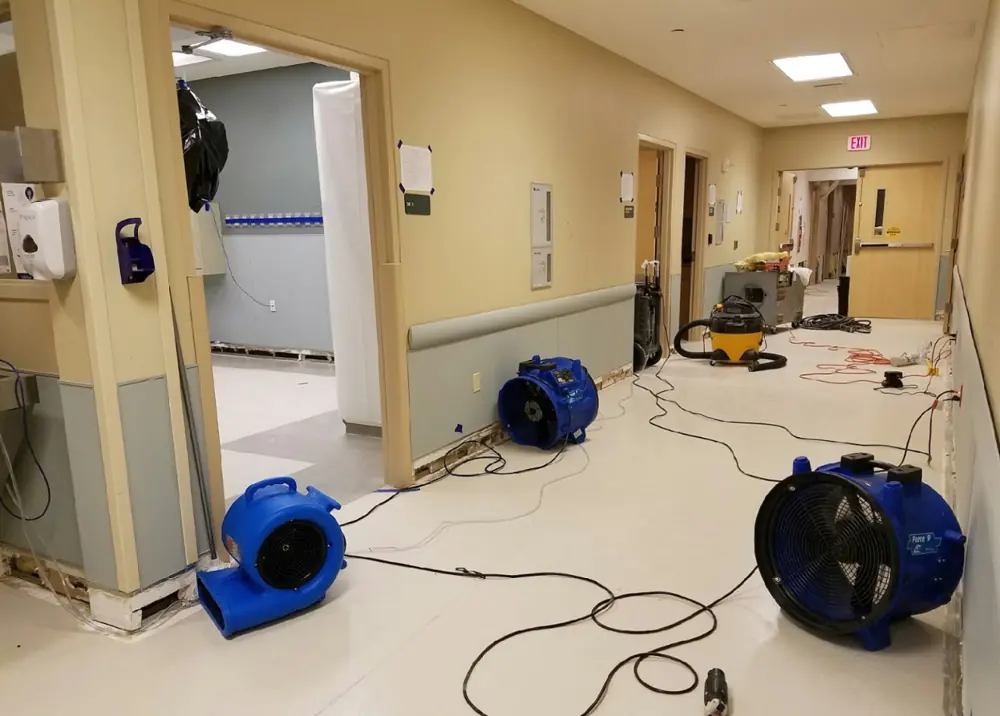
Air movers and dehumidifiers are staged in the attic to dry rafters, roof decking, and any ceiling joists affected by the leak.
The ceiling below is checked for trapped moisture and opened if needed, with readings confirming the full assembly is dry before insulation is replaced.

While help is on the way, these first steps, done only where it is safe, limit the damage and protect the insurance claim.
Shut the supply off at the source, or close the home's main valve if the source is not obvious. Stopping the flow limits the damage more than anything else.
Switch off electricity to the affected area, but only if the breaker can be reached without standing in or touching the water.
Get a crew dispatched right away. The sooner extraction and drying begin, the more flooring, drywall, and belongings can be saved.
Take photos and a short video of the water and the affected rooms before anything is moved, so the insurance claim starts strong.
Attic water damage limited to a small area of insulation and roof decking, caught soon after a single storm, typically runs from about $600 to $1,800 to dry and restore. A leak that went unnoticed through several rain events, saturating a larger insulation area and reaching the ceiling below, commonly runs from about $2,500 to $7,000. Roof repair itself is billed separately by a roofing contractor, while this covers the interior water damage, drying, and insulation replacement.
Crews reach Houston, Harris County, and the surrounding Gulf Coast communities fast, from the Heights, Montrose, and River Oaks to West University Place, Bellaire, Pasadena, and South Houston. See the full list on the areas served across Houston page.
See all areas servedEvery loss is photographed, measured, and logged from the first visit, so the paperwork holds up with the insurance carrier.
Technicians follow recognized IICRC drying standards and prove it with daily moisture readings on Houston homes, not guesswork.
Emergency dispatch any hour of the day or night, with a real crew on the way across Greater Houston, not a callback in the morning.
A real crew dispatched any hour, not a callback in the morning.
Trained technicians following recognized IICRC drying standards.
Truck-mounted, portable, and submersible for any size loss.
The loss is documented and billed to the carrier directly.
A ceiling stain on the floor below, a musty smell near an attic access point, or visibly sagging insulation during an unrelated attic visit are the most common ways a leak is first noticed.
No. Roof repair is handled by a roofer and HVAC line repair by an air conditioning technician. Restoration addresses the water damage to insulation, framing, and ceiling drywall.
Saturated insulation compresses and loses much of its insulating value even after it dries, and it can hold moisture against the roof deck and ceiling drywall longer than the surrounding area, so removal is usually the better option.
Yes, and Houston's humidity makes it more likely if wet insulation and framing are left unaddressed. That is why saturated material is removed and the remaining structure is actively dried rather than left to air out on its own.
Sudden storm damage, such as wind-driven rain through storm-damaged shingles, is commonly covered. Damage from a long-neglected HVAC line leak may be handled differently depending on the circumstances and policy.
Houston crews are on call 24 hours a day, local and fast, and can be on the way within the hour.
Call (346) 680-3171