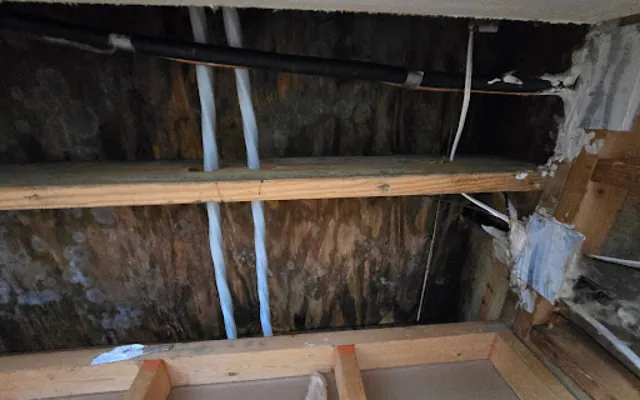
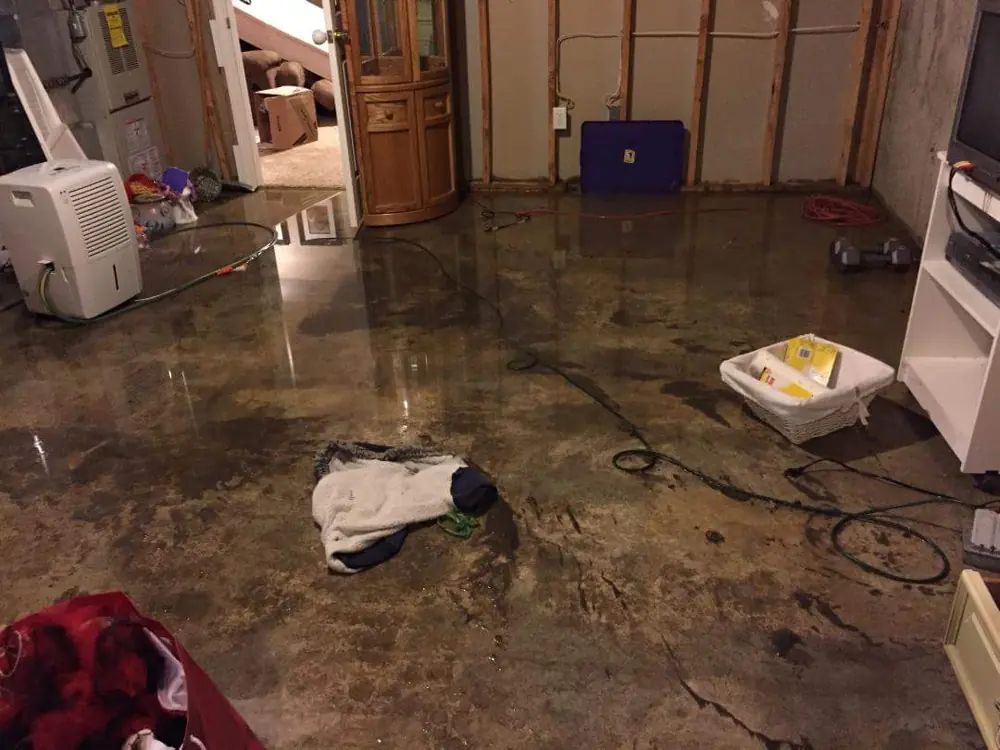
Classic ice dams form when sustained snow cover melts and refreezes at a roof edge over days, a setup Houston's Gulf Coast climate essentially never produces. What Houston homeowners actually deal with is roof leaks from wind-driven rain and the occasional hard freeze. Crews respond 24/7 either way.

A crew identifies whether the leak is coming from wind-driven rain at flashing or shingles, a failed roof section, or a burst pipe from a rare freeze event.
Attic insulation and ceiling drywall below the leak point are checked with moisture meters to map how far water has traveled.
Wet insulation and any drywall that cannot be dried in place are removed to open the cavity for direct drying.
The structure is dried and verified, and the homeowner is referred to a roofer or plumber as appropriate to address the actual source before it recurs.

While help is on the way, these first steps, done only where it is safe, limit the damage and protect the insurance claim.
Shut the supply off at the source, or close the home's main valve if the source is not obvious. Stopping the flow limits the damage more than anything else.
Switch off electricity to the affected area, but only if the breaker can be reached without standing in or touching the water.
Get a crew dispatched right away. The sooner extraction and drying begin, the more flooring, drywall, and belongings can be saved.
Take photos and a short video of the water and the affected rooms before anything is moved, so the insurance claim starts strong.
A contained roof leak from a single storm, limited to a small ceiling stain and attic insulation section, typically runs from about $400 to $1,200 to dry and repair. A leak that went unnoticed through multiple rain events and spread across a larger ceiling area, or a frozen-pipe burst during a rare hard freeze that reached drywall and flooring, commonly runs from about $2,000 to $6,000. Roof repair itself is handled separately by a roofing contractor and billed apart from the water damage cleanup and drying.
Crews reach Houston, Harris County, and the surrounding Gulf Coast communities fast, from the Heights, Montrose, and River Oaks to West University Place, Bellaire, Pasadena, and South Houston. See the full list on the areas served across Houston page.
See all areas servedEvery loss is photographed, measured, and logged from the first visit, so the paperwork holds up with the insurance carrier.
Technicians follow recognized IICRC drying standards and prove it with daily moisture readings on Houston homes, not guesswork.
Emergency dispatch any hour of the day or night, with a real crew on the way across Greater Houston, not a callback in the morning.
A real crew dispatched any hour, not a callback in the morning.
Trained technicians following recognized IICRC drying standards.
Truck-mounted, portable, and submersible for any size loss.
The loss is documented and billed to the carrier directly.
Essentially never. True ice dams require days of snow accumulation and sustained below-freezing temperatures at the roofline, conditions Houston's Gulf Coast climate does not produce. What looks like similar damage almost always traces to a different cause.
The most common causes in Houston are wind-driven rain pushed under shingles or through flashing during storms and hurricanes, aging or storm-damaged roofing material, and, during rare hard freezes, burst pipes in an attic or exterior wall.
Since the underlying cause is different, the claim is typically filed as wind or storm damage, or as a frozen pipe burst, rather than an ice dam claim, and documentation is built to match the actual cause of loss.
No. Roof repair is handled by a roofing contractor and pipe repair by a plumber. Restoration handles drying the attic, ceiling, and any affected drywall or flooring once the source is addressed.
Insulation that has been thoroughly saturated loses its effectiveness and typically needs replacement, while insulation only lightly touched near the edge of a leak may be dried and left in place if moisture readings confirm it is safe.
Houston crews are on call 24 hours a day, local and fast, and can be on the way within the hour.
Call (346) 680-3171