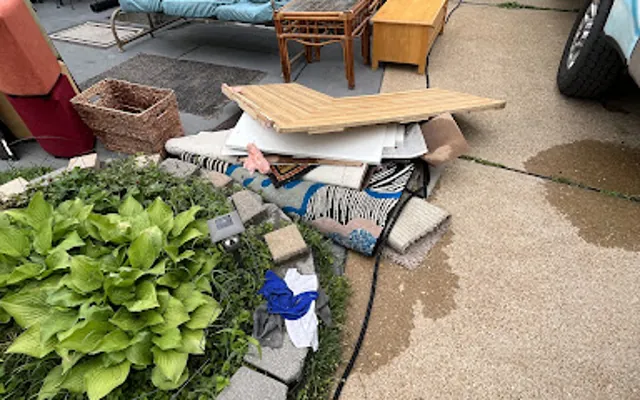
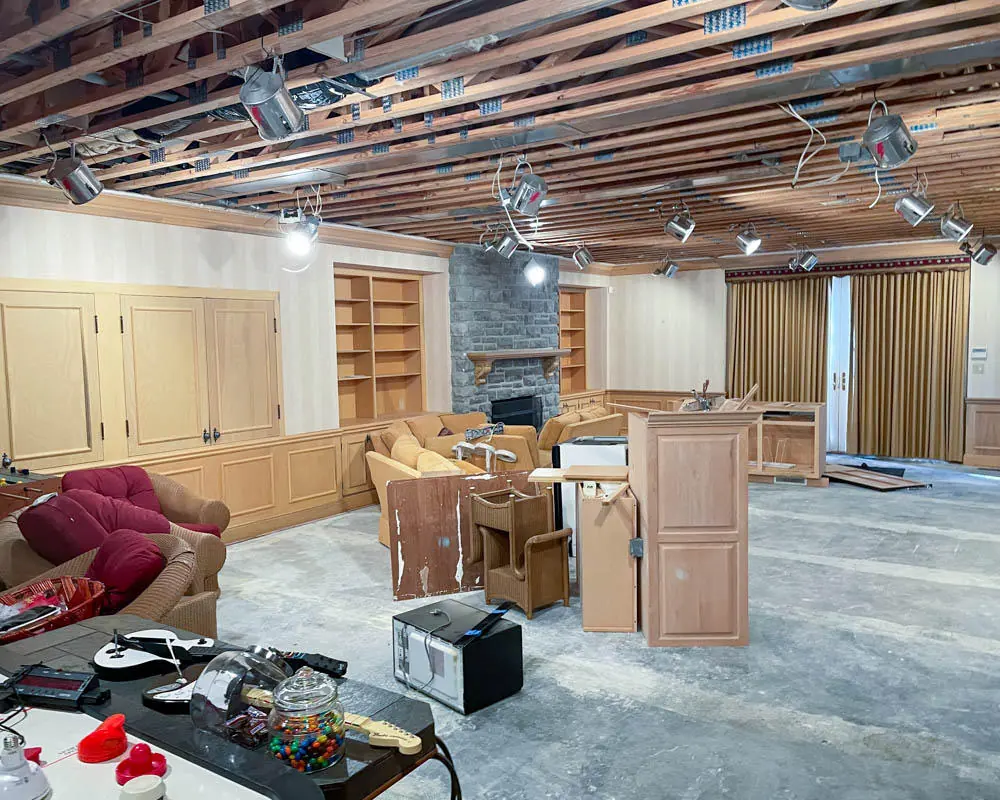
Houston has taken on floodwater from Hurricane Harvey, Tropical Storm Allison, and the Tax Day and Memorial Day floods, and every one of those events proved the same thing: bayou and street flooding can reach a slab-on-grade home fast. Crews respond 24/7 with extraction and drying equipment staged for large-loss flood work.

Dispatch runs around the clock during and after tropical weather, with crews prioritizing standing water and electrical safety checks before anyone enters a flooded structure.
Truck-mounted and submersible pumps clear standing water from floors, and portable pumps handle garages and low interior rooms where floodwater pools.
Flood-cut drywall, soaked insulation, and porous materials that touched floodwater are removed, since category 3 water cannot simply be dried in place.
Industrial air movers and dehumidifiers run to a moisture-verified target while photos and readings are logged for the insurance or disaster-assistance claim.

While help is on the way, these first steps, done only where it is safe, limit the damage and protect the insurance claim.
Shut the supply off at the source, or close the home's main valve if the source is not obvious. Stopping the flow limits the damage more than anything else.
Switch off electricity to the affected area, but only if the breaker can be reached without standing in or touching the water.
Get a crew dispatched right away. The sooner extraction and drying begin, the more flooring, drywall, and belongings can be saved.
Take photos and a short video of the water and the affected rooms before anything is moved, so the insurance claim starts strong.
Hurricane and flood restoration costs vary widely with how much water entered the home and how long it sat. A single flooded room with a quick response can run in the low thousands, while a whole first floor affected by bayou overflow, with flood-cut drywall and full structural drying, commonly runs from about $8,000 to $30,000 or more. Flood damage from a named storm is typically not covered by a standard homeowner's policy unless separate flood insurance is in place, so documentation is built to support whatever claim path applies, NFIP, private flood policy, or FEMA individual assistance after a declared disaster.
Crews reach Houston, Harris County, and the surrounding Gulf Coast communities fast, from the Heights, Montrose, and River Oaks to West University Place, Bellaire, Pasadena, and South Houston. See the full list on the areas served across Houston page.
See all areas servedEvery loss is photographed, measured, and logged from the first visit, so the paperwork holds up with the insurance carrier.
Technicians follow recognized IICRC drying standards and prove it with daily moisture readings on Houston homes, not guesswork.
Emergency dispatch any hour of the day or night, with a real crew on the way across Greater Houston, not a callback in the morning.
A real crew dispatched any hour, not a callback in the morning.
Trained technicians following recognized IICRC drying standards.
Truck-mounted, portable, and submersible for any size loss.
The loss is documented and billed to the carrier directly.
Yes. Floodwater that has traveled through streets, storm drains, or a bayou is treated as category 3 contaminated water. Direct contact should be avoided, and affected materials are handled with that contamination level in mind.
Usually not for rising floodwater. That typically requires a separate flood policy through the NFIP or a private flood carrier, or FEMA individual assistance after a federal disaster declaration. Wind-driven rain damage is often handled differently than ground flooding, so the cause of loss matters for the claim.
As soon as it is safe to enter. The longer contaminated water sits on drywall, flooring, and framing, the more material typically has to be removed rather than dried, and mold risk climbs quickly in Houston's humidity.
It is usually flood-cut above the visible waterline and removed, along with wet insulation behind it, because category 3 water inside a wall cavity cannot be reliably dried and sanitized in place.
Yes, with enough equipment and time. Large-loss jobs use multiple dehumidifiers and air movers per room, and drying continues until moisture meters confirm the structure has reached a safe, stable level before rebuild starts.
Houston crews are on call 24 hours a day, local and fast, and can be on the way within the hour.
Call (346) 680-3171