A burst pipe can put hundreds of gallons into a Houston home before anyone finds the source. Crews respond fast to help isolate the water, extract what has already spread, and dry the structure before drywall and flooring have to be replaced.

A crew is typically on-site within about an hour to confirm the water supply is off and assess how far the water has spread before cleanup begins.
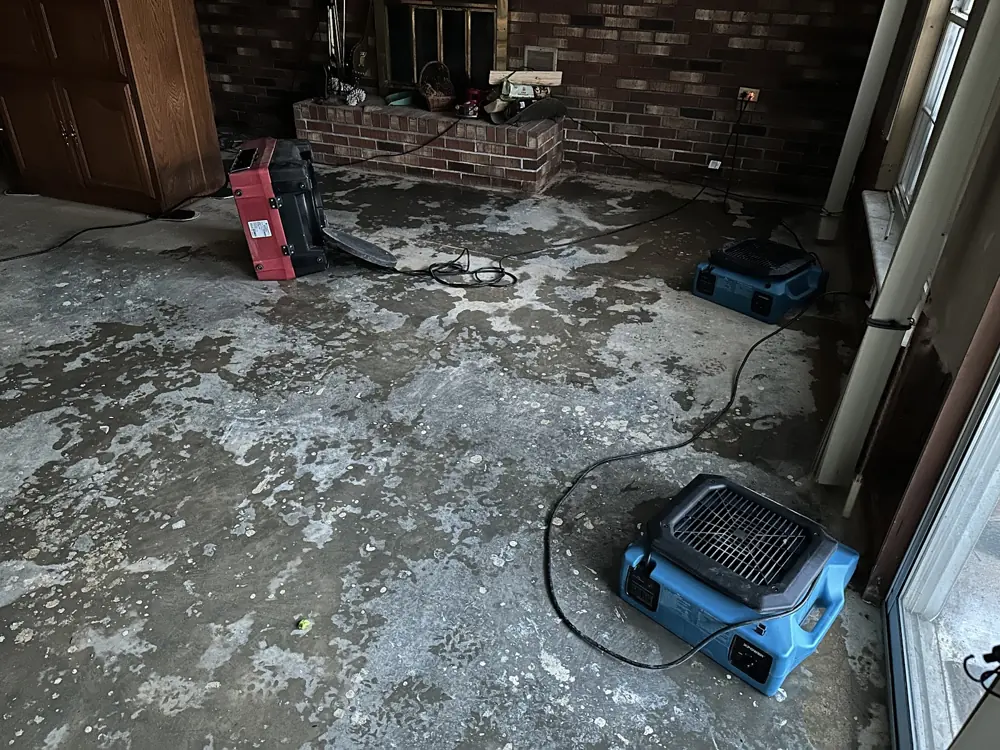
Standing water is pulled from flooring and any low-lying areas first, stopping further absorption into subfloor and baseboards.
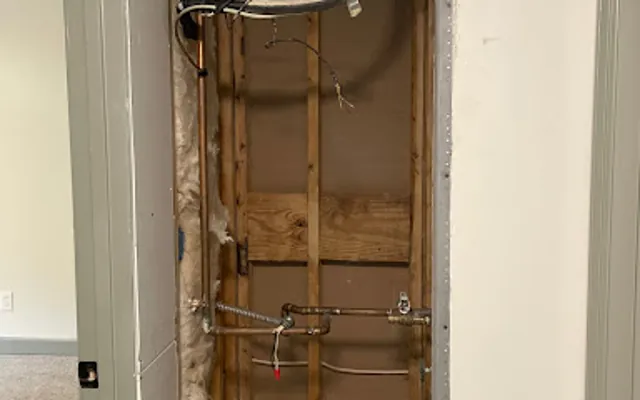
Wet drywall and insulation around the break are cut back to a dry line, exposing the pipe for repair and the cavity for drying.
Air movers and dehumidifiers dry the open cavity and surrounding materials, with moisture readings logged daily for the insurance claim.

While help is on the way, these first steps, done only where it is safe, limit the damage and protect the insurance claim.
Shut the supply off at the source, or close the home's main valve if the source is not obvious. Stopping the flow limits the damage more than anything else.
Switch off electricity to the affected area, but only if the breaker can be reached without standing in or touching the water.
Get a crew dispatched right away. The sooner extraction and drying begin, the more flooring, drywall, and belongings can be saved.
Take photos and a short video of the water and the affected rooms before anything is moved, so the insurance claim starts strong.
Burst pipe cleanup in Houston typically runs from about $1,500 to $6,000, depending on how long the pipe was leaking before discovery, how many rooms were affected, and whether the water reached flooring, cabinetry, or a ceiling below. A quickly caught break in a single wall sits on the low end, while a pipe that ran for hours overnight and spread across multiple rooms sits on the higher end. Sudden pipe failures are commonly covered under a standard homeowner's policy, and extraction and drying are documented separately from the plumbing repair itself.
Crews reach Houston, Harris County, and the surrounding Gulf Coast communities fast, from the Heights, Montrose, and River Oaks to West University Place, Bellaire, Pasadena, and South Houston. See the full list on the areas served across Houston page.
See all areas servedEvery loss is photographed, measured, and logged from the first visit, so the paperwork holds up with the insurance carrier.
Technicians follow recognized IICRC drying standards and prove it with daily moisture readings on Houston homes, not guesswork.
Emergency dispatch any hour of the day or night, with a real crew on the way across Greater Houston, not a callback in the morning.
A real crew dispatched any hour, not a callback in the morning.
Trained technicians following recognized IICRC drying standards.
Truck-mounted, portable, and submersible for any size loss.
The loss is documented and billed to the carrier directly.
It happens, but it is rare, limited to hard cold snaps like Winter Storm Uri in February 2021 rather than a normal winter event. Most burst pipes in Houston come from aging supply lines, corrosion, or a joint failure rather than freezing.
Moisture meters and, when needed, thermal imaging locate the wet area even before a visible stain appears, which narrows down where to open the wall instead of guessing.
Only the section that actually got wet usually needs to come out. Moisture readings guide exactly how far to cut back, so undamaged drywall around the break is often left in place.
Sudden, accidental pipe failures are commonly covered, including freeze-related breaks during an event like Winter Storm Uri. Gradual leaks from long-term corrosion may be reviewed differently depending on the policy.
If it is safe to do so, shutting off the main water supply limits how much water keeps entering the home. Electrical safety in the affected area should be checked before anyone walks through standing water.
Houston crews are on call 24 hours a day, local and fast, and can be on the way within the hour.
Call (346) 680-3171