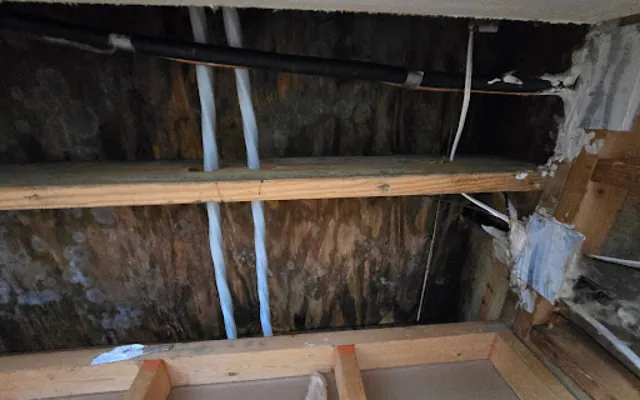
Wind-driven rain, hail, and storm damage all give water a way into a Houston attic, and once it is in, it tracks along framing until it finds the weak point in a ceiling below. Crews trace the path, dry the attic and ceiling cavity, and document the damage for repair.

A crew typically arrives within about an hour to assess whether the ceiling below is at risk of sagging or collapse before work begins.
Moisture meters and thermal imaging follow the water from the roof penetration through the attic framing to where it surfaced on the ceiling below.
Wet insulation is identified and removed where needed, since saturated insulation loses its effectiveness and holds moisture against the framing.
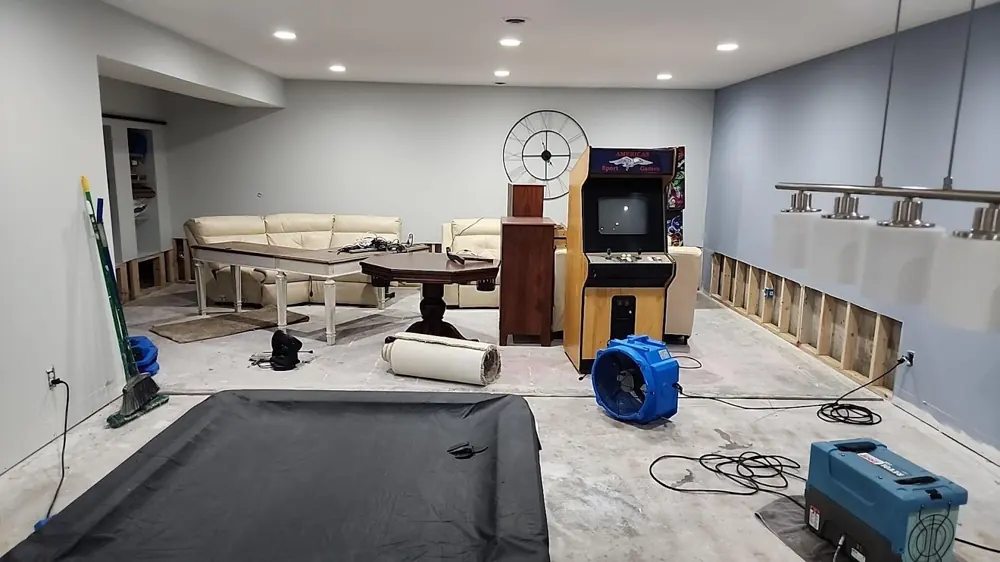
The affected ceiling section is opened along the moisture line, air movers and dehumidifiers dry the space, and photos and readings are logged for the insurance and roofing claims.

While help is on the way, these first steps, done only where it is safe, limit the damage and protect the insurance claim.
Shut the supply off at the source, or close the home's main valve if the source is not obvious. Stopping the flow limits the damage more than anything else.
Switch off electricity to the affected area, but only if the breaker can be reached without standing in or touching the water.
Get a crew dispatched right away. The sooner extraction and drying begin, the more flooring, drywall, and belongings can be saved.
Take photos and a short video of the water and the affected rooms before anything is moved, so the insurance claim starts strong.
Roof leak water damage cleanup in Houston generally runs from about $500 to $4,000, depending on how long the leak went undetected, how much insulation and ceiling drywall were affected, and how far the water traveled through the attic. A recently discovered leak from a single storm sits on the low end, while a leak that ran through multiple rain events before being found sits on the higher end. This covers the water damage cleanup and drying, separate from the roofing repair itself, and moisture documentation is prepared for both claims.
Crews reach Houston, Harris County, and the surrounding Gulf Coast communities fast, from the Heights, Montrose, and River Oaks to West University Place, Bellaire, Pasadena, and South Houston. See the full list on the areas served across Houston page.
See all areas servedEvery loss is photographed, measured, and logged from the first visit, so the paperwork holds up with the insurance carrier.
Technicians follow recognized IICRC drying standards and prove it with daily moisture readings on Houston homes, not guesswork.
Emergency dispatch any hour of the day or night, with a real crew on the way across Greater Houston, not a callback in the morning.
A real crew dispatched any hour, not a callback in the morning.
Trained technicians following recognized IICRC drying standards.
Truck-mounted, portable, and submersible for any size loss.
The loss is documented and billed to the carrier directly.
Wind-driven rain during Gulf Coast storms, hail damage during severe weather, and shingle wear from years of intense heat and sun are the most common causes, rather than anything related to snow or ice, which Houston roofs essentially never deal with.
Water entering the roof can travel several feet along the attic framing or decking before it finds a weak spot in the ceiling below, so the visible stain often sits well away from the actual roof penetration.
Usually yes, once insulation is saturated it compresses and loses much of its insulating value, and it also holds moisture against the framing longer than it would dry on its own in Houston's humidity.
Sudden damage from a storm or hail event is commonly covered, while damage from a long-neglected, gradually failing roof may be reviewed more closely. Tracing the leak to a specific storm event helps support the claim.
Once the roof itself is repaired and the attic and ceiling cavity are fully dried and moisture-verified, the opened ceiling section is patched and finished to match the surrounding surface.
Houston crews are on call 24 hours a day, local and fast, and can be on the way within the hour.
Call (346) 680-3171