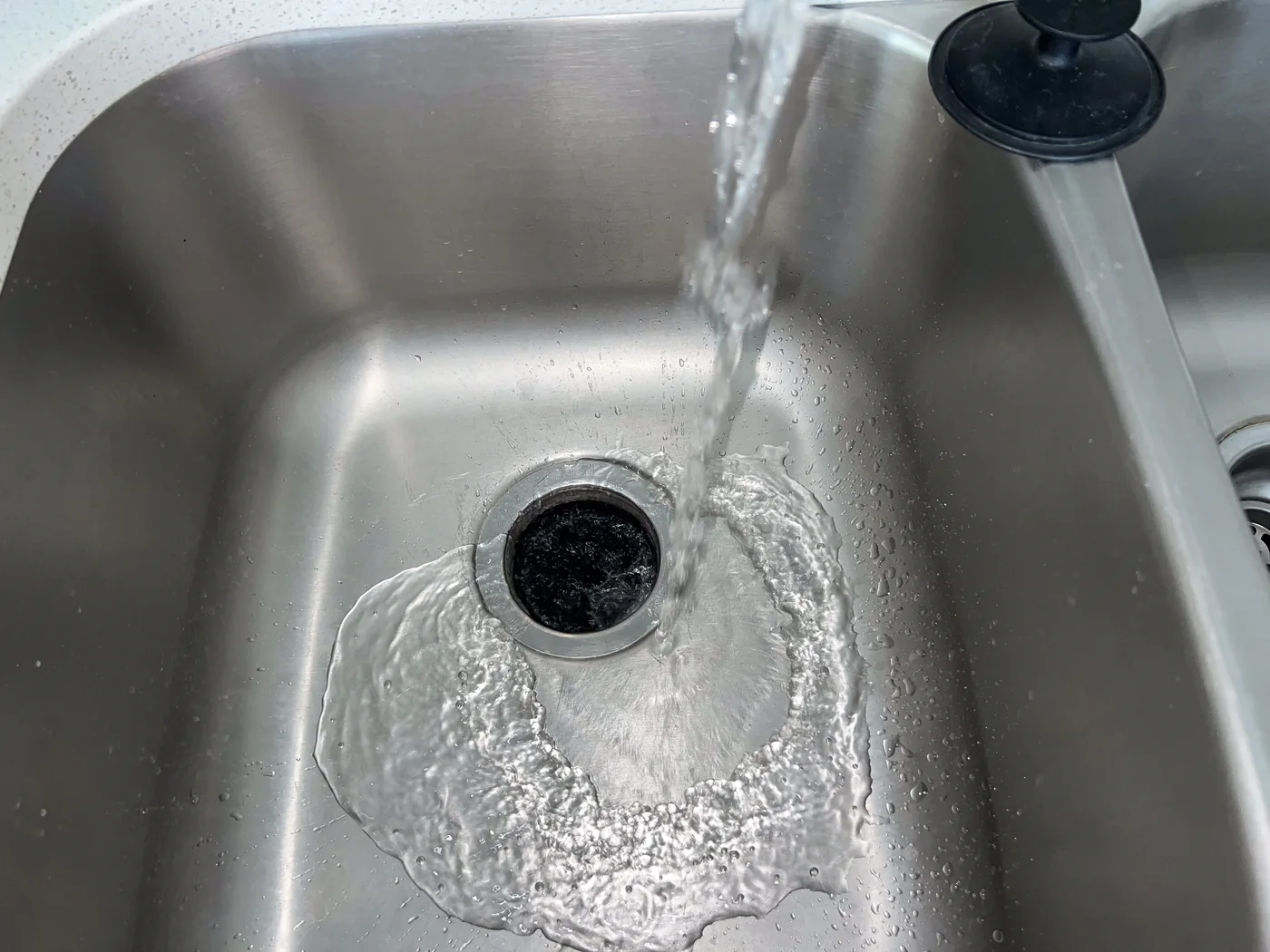
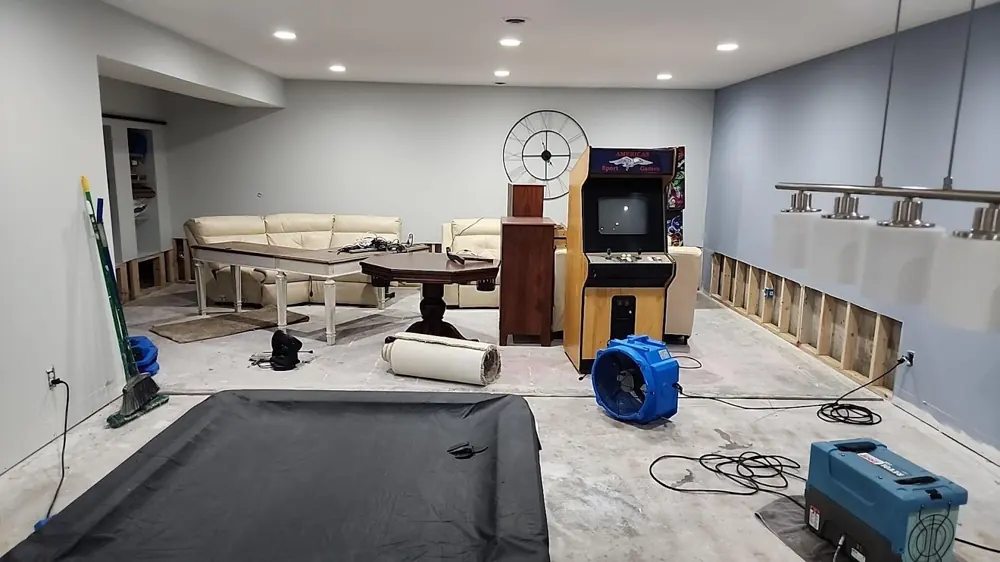
A worn faucet valve, a corroded supply line, or a leaking shower fixture connection can drip steadily behind a wall or under a cabinet for weeks in Houston's humidity before it becomes obvious. Crews respond 24/7 to extract and dry once it is found.

A crew confirms the leaking faucet, valve, or fixture connection and whether the water supply needs to be shut off before cleanup starts.
Standing water is extracted from the cabinet base or, if the leak is behind a wall, the cavity is opened to remove trapped water.
Meters check how far moisture traveled along baseboards and nearby flooring from the leak point.
Air movers dry the affected cabinet, wall cavity, or flooring until readings confirm the area is fully dry.

While help is on the way, these first steps, done only where it is safe, limit the damage and protect the insurance claim.
Shut the supply off at the source, or close the home's main valve if the source is not obvious. Stopping the flow limits the damage more than anything else.
Switch off electricity to the affected area, but only if the breaker can be reached without standing in or touching the water.
Get a crew dispatched right away. The sooner extraction and drying begin, the more flooring, drywall, and belongings can be saved.
Take photos and a short video of the water and the affected rooms before anything is moved, so the insurance claim starts strong.
A faucet or fixture leak caught early, limited to a cabinet base or a small section of baseboard, typically runs from about $250 to $900 to extract and dry. A slow leak behind a wall that went unnoticed for weeks and requires opening drywall to dry the cavity commonly runs from about $900 to $2,500. This covers water damage cleanup only, separate from repairing or replacing the actual faucet, valve, or fixture, which is typically a straightforward plumbing repair.
Crews reach Houston, Harris County, and the surrounding Gulf Coast communities fast, from the Heights, Montrose, and River Oaks to West University Place, Bellaire, Pasadena, and South Houston. See the full list on the areas served across Houston page.
See all areas servedEvery loss is photographed, measured, and logged from the first visit, so the paperwork holds up with the insurance carrier.
Technicians follow recognized IICRC drying standards and prove it with daily moisture readings on Houston homes, not guesswork.
Emergency dispatch any hour of the day or night, with a real crew on the way across Greater Houston, not a callback in the morning.
A real crew dispatched any hour, not a callback in the morning.
Trained technicians following recognized IICRC drying standards.
Truck-mounted, portable, and submersible for any size loss.
The loss is documented and billed to the carrier directly.
Common signs include a bowing or discolored baseboard, a musty smell near a cabinet or wall, a noticeably higher water bill, or visible water stains on a ceiling or floor below the fixture.
No. Repairing or replacing the actual faucet, valve, or fixture connection is plumbing work. Restoration addresses the water damage to cabinets, walls, and flooring caused by the leak.
Many older homes still have original or partially replaced galvanized supply lines and valves, which corrode internally over decades and are more prone to slow leaks at fittings than modern copper or PEX lines.
Sometimes, if the leak was caught quickly and the cavity is not fully saturated. A longer-running leak usually requires opening the drywall to dry the cavity directly and check the framing behind it.
A sudden fixture or valve failure is often covered as accidental water damage, while a leak that clearly ran unnoticed for a long time may be treated as a gradual damage exclusion depending on the policy.
Houston crews are on call 24 hours a day, local and fast, and can be on the way within the hour.
Call (346) 680-3171