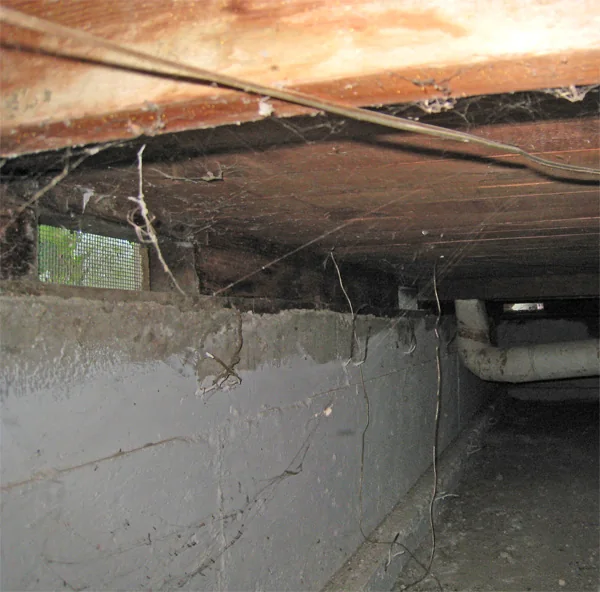
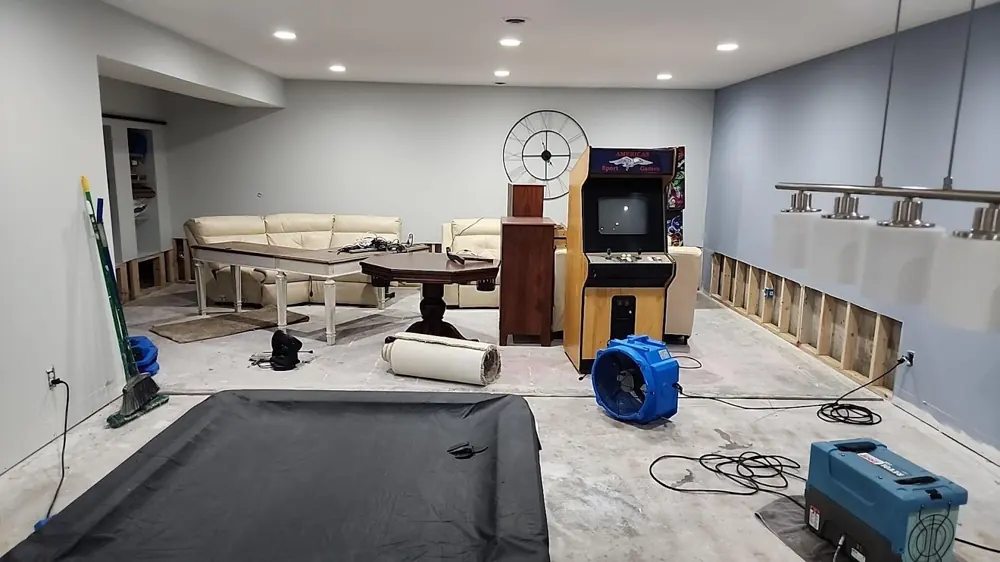
Many of Houston's older pier-and-beam bungalows sit up on a vented crawlspace, and heavy rain or a plumbing leak underneath can leave standing water there for weeks without anyone noticing from inside. Crews extract the water and dry the space before it reaches the floor joists.

A crew typically arrives within about an hour to assess crawlspace access and confirm how much standing water is present before entering.
Submersible pumps and wet vacuums remove standing water from the crawlspace floor, working toward the low points where water collects.
Floor joists, subfloor, and any insulation are checked for moisture with a meter to determine what needs drying versus removal.
Dehumidifiers and air movers are staged in the crawlspace to bring humidity down, with moisture readings tracked until the space returns to normal.

While help is on the way, these first steps, done only where it is safe, limit the damage and protect the insurance claim.
Shut the supply off at the source, or close the home's main valve if the source is not obvious. Stopping the flow limits the damage more than anything else.
Switch off electricity to the affected area, but only if the breaker can be reached without standing in or touching the water.
Get a crew dispatched right away. The sooner extraction and drying begin, the more flooring, drywall, and belongings can be saved.
Take photos and a short video of the water and the affected rooms before anything is moved, so the insurance claim starts strong.
Crawlspace water removal in Houston typically runs from about $600 to $3,000, depending on how much standing water is present, how long it has been there, and whether floor joists or insulation need to be replaced rather than dried. A recently discovered leak sits on the low end, while water that has sat under the house for weeks and affected the framing sits on the higher end. Because crawlspace issues are often found well after the fact, moisture documentation is especially important for supporting an insurance claim tied to a specific plumbing or storm event.
Crews reach Houston, Harris County, and the surrounding Gulf Coast communities fast, from the Heights, Montrose, and River Oaks to West University Place, Bellaire, Pasadena, and South Houston. See the full list on the areas served across Houston page.
See all areas servedEvery loss is photographed, measured, and logged from the first visit, so the paperwork holds up with the insurance carrier.
Technicians follow recognized IICRC drying standards and prove it with daily moisture readings on Houston homes, not guesswork.
Emergency dispatch any hour of the day or night, with a real crew on the way across Greater Houston, not a callback in the morning.
A real crew dispatched any hour, not a callback in the morning.
Trained technicians following recognized IICRC drying standards.
Truck-mounted, portable, and submersible for any size loss.
The loss is documented and billed to the carrier directly.
Older pier-and-beam construction, common in neighborhoods like the Heights, Riverside Terrace, and Lindale Park, raises the house on piers with a vented crawlspace underneath rather than a slab. It predates the slab-on-grade construction used in most newer Houston homes.
A musty smell, a soft or springy spot in the floor, or higher indoor humidity than usual are common signs. Because the crawlspace is out of sight, water can sit there for weeks before any of these signs are noticed.
Often, yes, if the water is removed and the space is dried before the wood has time to soften or develop rot. Joists that have been wet for an extended period are checked closely and replaced only where the wood has actually been compromised.
Not always. Heavy rain and poor yard drainage are common causes, but a leaking supply line running under the house is just as often the real source, which is why the actual cause is confirmed before repairs are planned.
Sudden plumbing failures are commonly covered, while damage from long-term drainage issues may be reviewed differently depending on the policy. Documentation of how long the water was present and its likely source supports whichever claim applies.
Houston crews are on call 24 hours a day, local and fast, and can be on the way within the hour.
Call (346) 680-3171