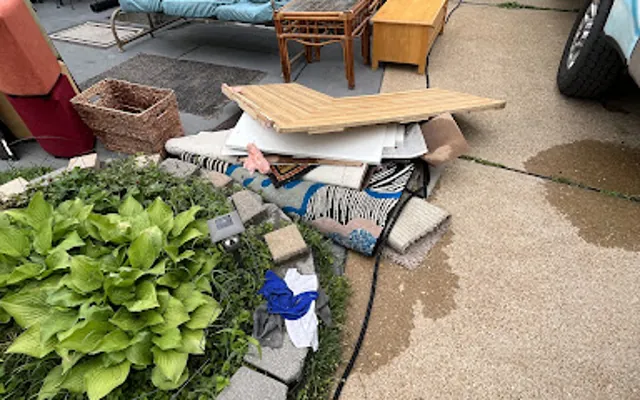
A break in a city water main or the service line feeding a home can push water across a yard, driveway, and into a garage or ground-floor room faster than most homeowners expect. Crews respond 24/7 to extract and dry once the line is isolated.

A crew confirms the water main or service line has been shut off or isolated before starting extraction inside the home.
Pumps and extractors clear water from the garage, utility room, or any ground-floor area the break reached.
Drywall, stored belongings, and flooring near the affected area are checked with moisture meters to see what can be dried versus what needs removal.
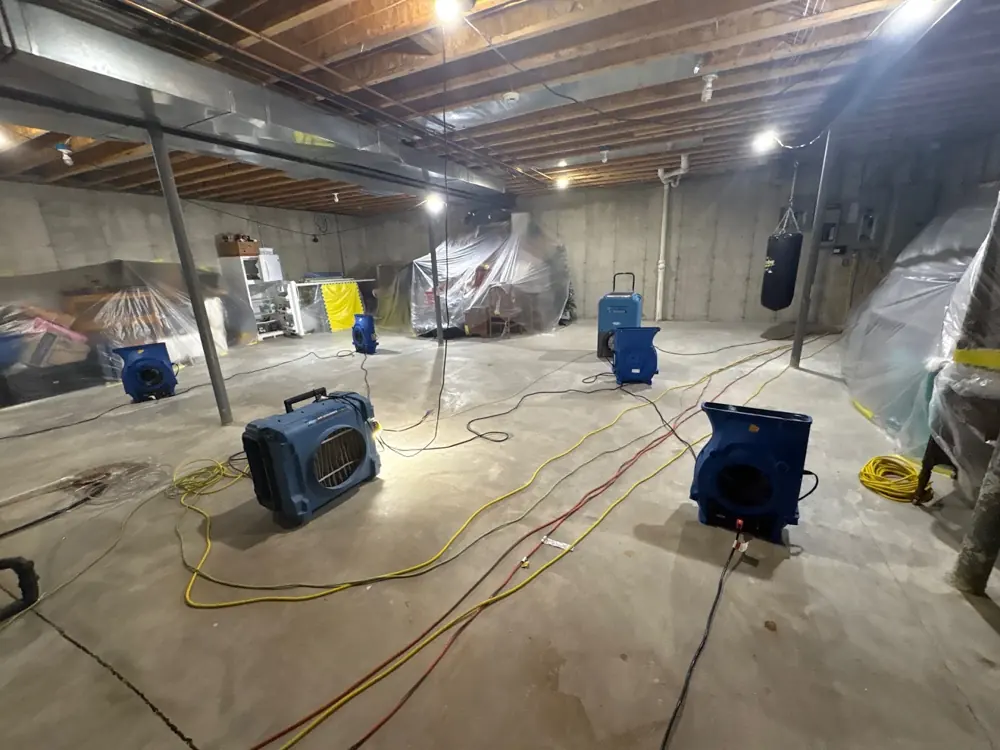
Air movers and dehumidifiers run until readings confirm the space is dry, with photos logged for any insurance claim.

While help is on the way, these first steps, done only where it is safe, limit the damage and protect the insurance claim.
Shut the supply off at the source, or close the home's main valve if the source is not obvious. Stopping the flow limits the damage more than anything else.
Switch off electricity to the affected area, but only if the breaker can be reached without standing in or touching the water.
Get a crew dispatched right away. The sooner extraction and drying begin, the more flooring, drywall, and belongings can be saved.
Take photos and a short video of the water and the affected rooms before anything is moved, so the insurance claim starts strong.
Cleanup after a water main break that reaches a garage or utility room typically runs from about $500 to $2,000, depending on how much standing water entered and whether drywall or stored items were affected. If water tracked into a living space or required larger-scale structural drying, cost commonly runs from about $2,500 to $6,000. Any repair to the actual water main or service line is handled by the city utility or a plumber and billed separately from cleanup and drying.
Crews reach Houston, Harris County, and the surrounding Gulf Coast communities fast, from the Heights, Montrose, and River Oaks to West University Place, Bellaire, Pasadena, and South Houston. See the full list on the areas served across Houston page.
See all areas servedEvery loss is photographed, measured, and logged from the first visit, so the paperwork holds up with the insurance carrier.
Technicians follow recognized IICRC drying standards and prove it with daily moisture readings on Houston homes, not guesswork.
Emergency dispatch any hour of the day or night, with a real crew on the way across Greater Houston, not a callback in the morning.
A real crew dispatched any hour, not a callback in the morning.
Trained technicians following recognized IICRC drying standards.
Truck-mounted, portable, and submersible for any size loss.
The loss is documented and billed to the carrier directly.
A break in the city main itself is typically the municipal utility's responsibility, while a break in the private service line from the meter to the home is usually the homeowner's. Either way, restoration handles the resulting water damage inside the home, not the line repair.
Once the water source is confirmed shut off or isolated, dispatch runs 24/7 and a crew is typically on site in about an hour to begin extraction and drying.
It depends on the material and how long it sat in water. Sealed plastic totes often protect contents, while cardboard boxes and porous items left in standing water usually cannot be salvaged.
Damage from a break in the homeowner's own service line is often covered as sudden accidental water damage, while damage tied to a city main break may involve a separate municipal claims process. Documentation supports either path.
The same extraction and drying process applies, just scaled to the affected rooms, with moisture mapping used to confirm how far the water traveled before drying equipment is placed.
Houston crews are on call 24 hours a day, local and fast, and can be on the way within the hour.
Call (346) 680-3171