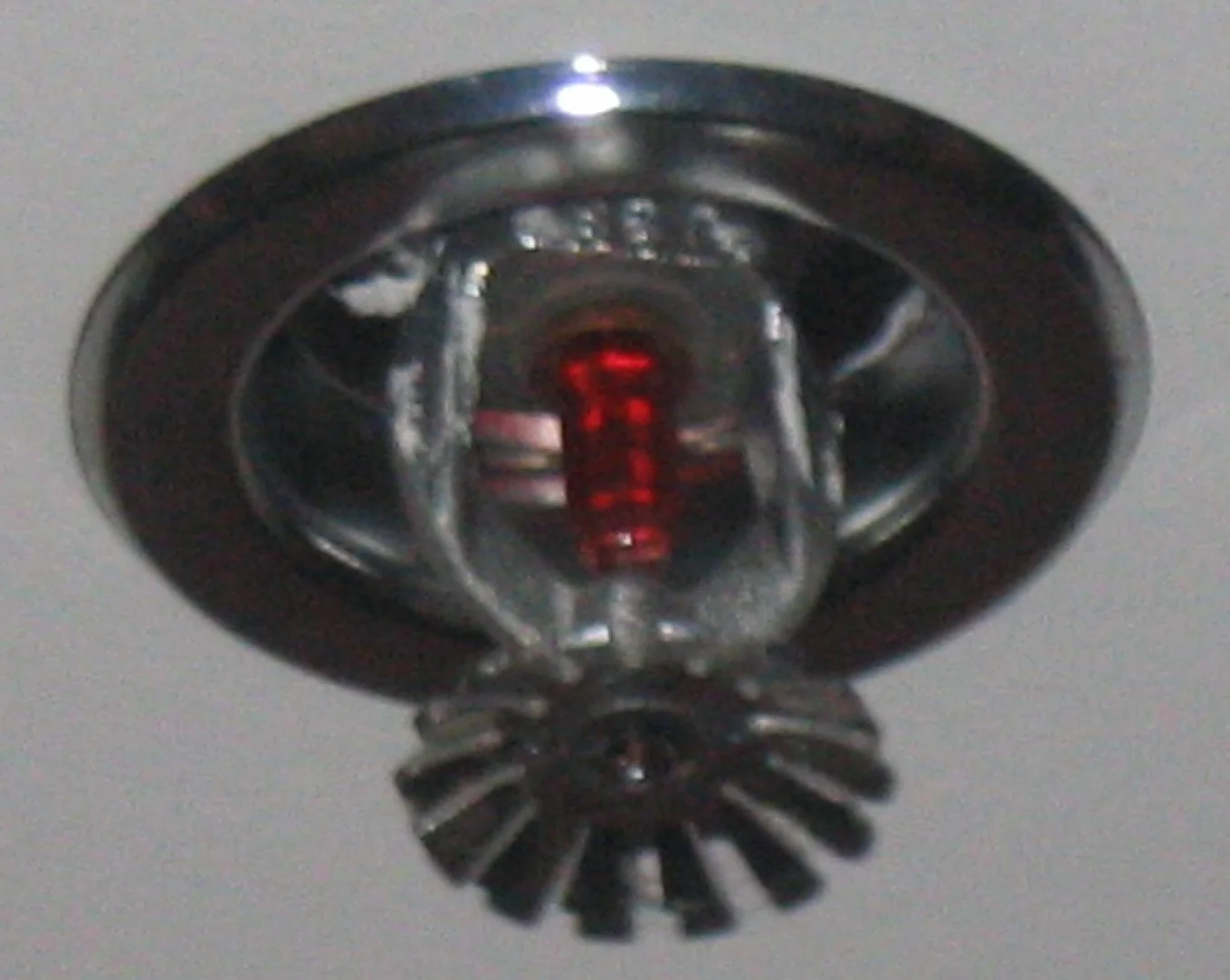
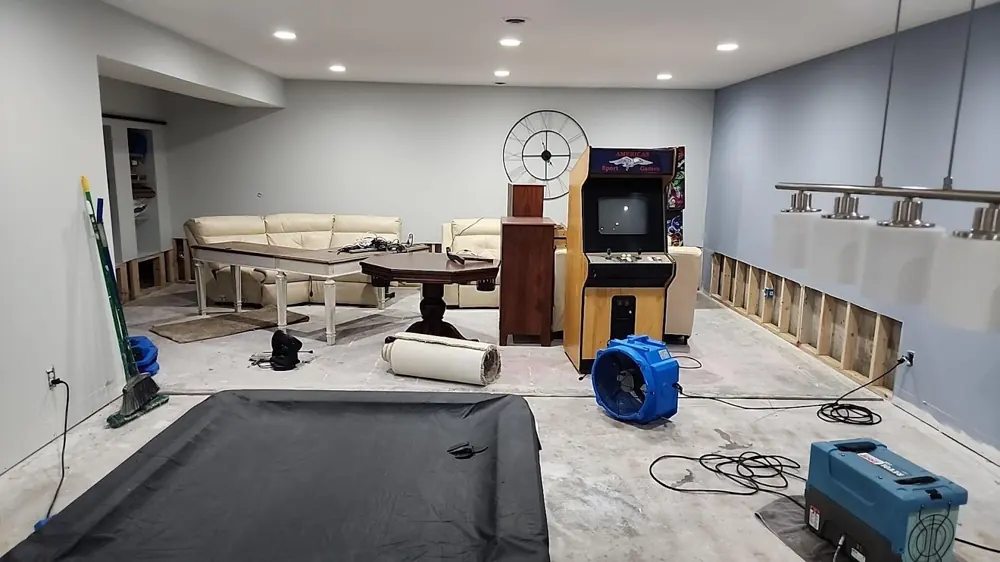
A single fire sprinkler head can release over 20 gallons a minute, and when one triggers accidentally or a pipe corrodes and fails in a Houston condo tower or commercial building, the volume of water spreads fast across multiple units and floors. Crews respond 24/7 with large-loss extraction equipment.

Crews confirm the sprinkler system has been shut off or isolated by building maintenance or fire officials before beginning large-volume extraction.
Truck-mounted and portable extraction units clear standing water across every affected unit and common area, working floor by floor if the discharge traveled downward.
Ceilings below the discharge point and walls in affected units are opened where moisture is trapped, since sprinkler water often saturates cavities before it becomes visible.
Each affected unit is dried to a verified moisture target with its own documentation, since claims are often filed separately by different owners or the building association.

While help is on the way, these first steps, done only where it is safe, limit the damage and protect the insurance claim.
Shut the supply off at the source, or close the home's main valve if the source is not obvious. Stopping the flow limits the damage more than anything else.
Switch off electricity to the affected area, but only if the breaker can be reached without standing in or touching the water.
Get a crew dispatched right away. The sooner extraction and drying begin, the more flooring, drywall, and belongings can be saved.
Take photos and a short video of the water and the affected rooms before anything is moved, so the insurance claim starts strong.
Cleanup for a sprinkler discharge contained to a single unit typically runs from about $2,000 to $6,000 depending on how much of the unit was affected. When a discharge travels down through multiple floors of a condo or commercial building, combined extraction and drying across all affected units commonly runs from $15,000 to well over $50,000, since it involves large-loss equipment and coordinated drying across several spaces at once. Costs are typically split and documented per affected unit or handled through the building's master insurance policy, depending on the property's structure.
Crews reach Houston, Harris County, and the surrounding Gulf Coast communities fast, from the Heights, Montrose, and River Oaks to West University Place, Bellaire, Pasadena, and South Houston. See the full list on the areas served across Houston page.
See all areas servedEvery loss is photographed, measured, and logged from the first visit, so the paperwork holds up with the insurance carrier.
Technicians follow recognized IICRC drying standards and prove it with daily moisture readings on Houston homes, not guesswork.
Emergency dispatch any hour of the day or night, with a real crew on the way across Greater Houston, not a callback in the morning.
A real crew dispatched any hour, not a callback in the morning.
Trained technicians following recognized IICRC drying standards.
Truck-mounted, portable, and submersible for any size loss.
The loss is documented and billed to the carrier directly.
A typical residential or commercial sprinkler head can release over 20 gallons per minute while active, which adds up fast, often producing more standing water in a short time than most other indoor water losses.
Accidental activation can come from mechanical impact to the head, a manufacturing or installation defect, corrosion in aging pipe, or, in rare cases, a pipe that froze and cracked during an unusual cold snap and failed once it thawed.
Not usually. Sprinkler piping typically runs through ceilings serving multiple units, so a discharge on one floor commonly travels down into one or more units below before the system is shut off.
Each affected unit is typically assessed and dried with its own moisture readings and photos, since individual owners, tenants, and the building's master policy may each need separate documentation for their part of the claim.
No. Fixing the failed head or pipe is fire protection or plumbing contractor work, coordinated with building management. Restoration handles the resulting water extraction and structural drying.
Houston crews are on call 24 hours a day, local and fast, and can be on the way within the hour.
Call (346) 680-3171