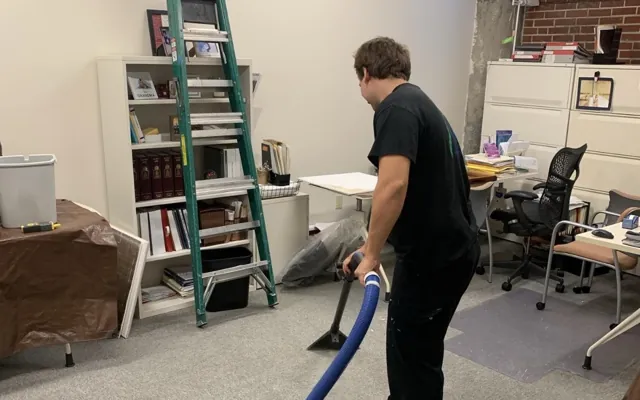
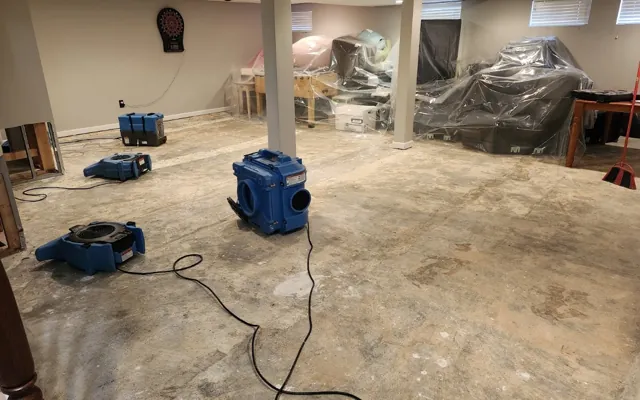
When water intrusion hits a Museum District, TX home, local crews respond quickly to extract standing water. Technicians follow IICRC-standard methods to mitigate damage and prepare the property for the drying phase of restoration.

A real person answers the call any time, day or night. A local crew is typically at a Museum District address in about an hour to assess the scene and check for electrical hazards before starting extraction work.
Technicians use truck-mounted extractors and submersible pumps to quickly pull standing water from slab foundations and garages. They prioritize the lowest-lying rooms first to prevent further spread across the property.
Weighted wands pull water from carpet and pad, while saturated drywall and baseboards are cut back. Moisture meters and thermal imaging then map the full extent of saturation for the drying team.

In Museum District, water extraction usually runs from about $400 to $1,800 as part of a larger restoration job, depending on how much water there is, how far it spread across the slab, and how much has to be pulled from carpet and drywall. A small clean-water leak from a supply line sits on the low end, while a bayou-flood or hurricane loss affecting several rooms sits on the high end. Extraction is normally one line item on a claim that also covers drying and repairs, and it is typically documented and billed direct to the carrier or the homeowner's flood policy.
The Museum District, TX blends historic homes with newer infill construction near Brays Bayou. Flat roofs on modern townhomes can pool water, while older bayou-adjacent lots are prone to surface flooding. This creates recurring water intrusion that demands prompt, professional water extraction to protect structures and contents. Heavy seasonal rains in Houston overwhelm flat roofs on newer townhomes and saturate the low-lying, bayou-adjacent lots common in the older parts of the Museum District. This geography makes water extraction a frequent need for the area's dense mix of housing types. From Museum District, crews also cover nearby Riverside Terrace, River Oaks, The Heights, Lindale Park, Eastwood, Rice Military. See every neighborhood and town on the full service area page.
See all areas servedEvery loss is photographed, measured, and logged from the first visit, so the paperwork holds up with the insurance carrier.
Technicians follow recognized IICRC drying standards and prove it with daily moisture readings on Museum District homes, not guesswork.
Emergency dispatch any hour of the day or night, with a real crew on the way across Greater Houston, not a callback in the morning.
A real crew dispatched any hour, not a callback in the morning.
Trained technicians following recognized IICRC drying standards.
Truck-mounted, portable, and submersible for any size loss.
The loss is documented and billed to the carrier directly.
In Houston, extraction as part of a larger job often ranges from about $400 to $1,800. A small, clean leak from a supply line is on the lower end, while extensive flooding from bayou overflow affecting multiple rooms would be higher. It's one documented line item for insurance.
For a typical Museum District townhome, bulk water removal can often be completed in a few hours. The timeline depends on the water source, volume, and how far it spread. Detailed extraction from carpets and wall cavities adds time but is critical before drying equipment is set up.
Crews are on call 24 hours a day and can be on the way to Museum District within the hour.
Call (346) 680-3171