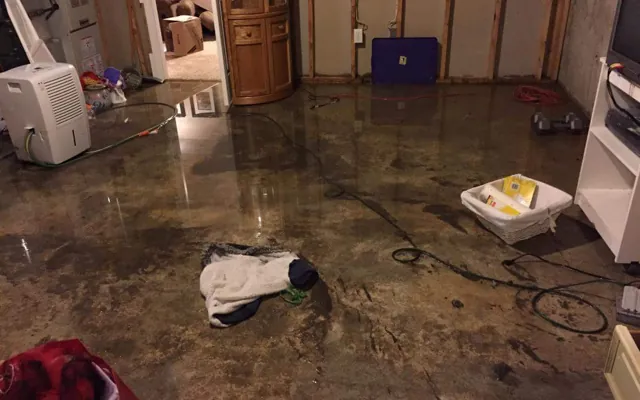
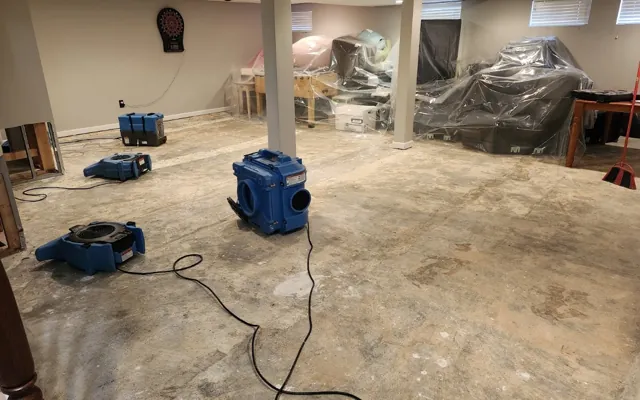
A Third Ward, TX water heater leak cleanup crew responds quickly, typically within about an hour. Local teams use IICRC-standard methods to extract water and dry the area, limiting damage to the home's original flooring and walls.

A crew arrives to quickly shut off the water supply to the heater, checking if the leak is from the tank itself or a connection. This immediate step prevents further flooding in the home's compact layout.
Technicians extract all standing water from the garage, closet, or attic floor. They also check any adjoining room the water traveled into, pulling moisture from under flooring to prevent secondary damage.
For attic or closet units, the team uses moisture meters to inspect the ceiling and wall cavities below. In older Third Ward homes, a slow leak can travel far in the framing before it becomes visible.

Water heater leak cleanup in Third Ward typically runs from about $500 to $3,000, depending on where the unit is installed, how much water was released, and whether it reached flooring or a ceiling in an adjoining room. A garage leak caught quickly sits on the low end, while an attic unit that leaked into a ceiling below sits on the higher end. Sudden tank failures are commonly covered under a standard homeowner's policy, separate from the cost of replacing the water heater itself.
In the historic Third Ward, TX, water heater leaks are a common issue in early-1900s bungalows and shotgun houses where decades-old plumbing meets newer fittings. Proximity to Brays Bayou also adds ambient moisture that can accelerate corrosion. A leak from a closet, attic, or garage unit can quickly affect adjoining rooms and ceiling cavities. Older plumbing in the neighborhood's original housing stock is prone to slow corrosion and sudden fitting failures. The flat, low-lying terrain and high humidity near Brays Bayou can also contribute to moisture issues that stress water heater components over time. From Third Ward, crews also cover nearby Rice Military, The Heights, Montrose, East End, Riverside Terrace, Museum District. See every neighborhood and town on the full service area page.
See all areas servedEvery loss is photographed, measured, and logged from the first visit, so the paperwork holds up with the insurance carrier.
Technicians follow recognized IICRC drying standards and prove it with daily moisture readings on Third Ward homes, not guesswork.
Emergency dispatch any hour of the day or night, with a real crew on the way across Greater Houston, not a callback in the morning.
A real crew dispatched any hour, not a callback in the morning.
Trained technicians following recognized IICRC drying standards.
Truck-mounted, portable, and submersible for any size loss.
The loss is documented and billed to the carrier directly.
In most cases, yes. Sudden, accidental failures like a tank rupture are commonly covered under a standard homeowner's policy. The cleanup cost is separate from replacing the heater itself. Local crews provide the detailed documentation insurers need for claims in the area.
Drying typically takes two to four days, depending on how much water was released and the materials affected. In an older Third Ward home with plaster or original wood subfloors, crews monitor moisture levels closely until everything meets the IICRC dry standard.
Crews are on call 24 hours a day and can be on the way to Third Ward within the hour.
Call (346) 680-3171